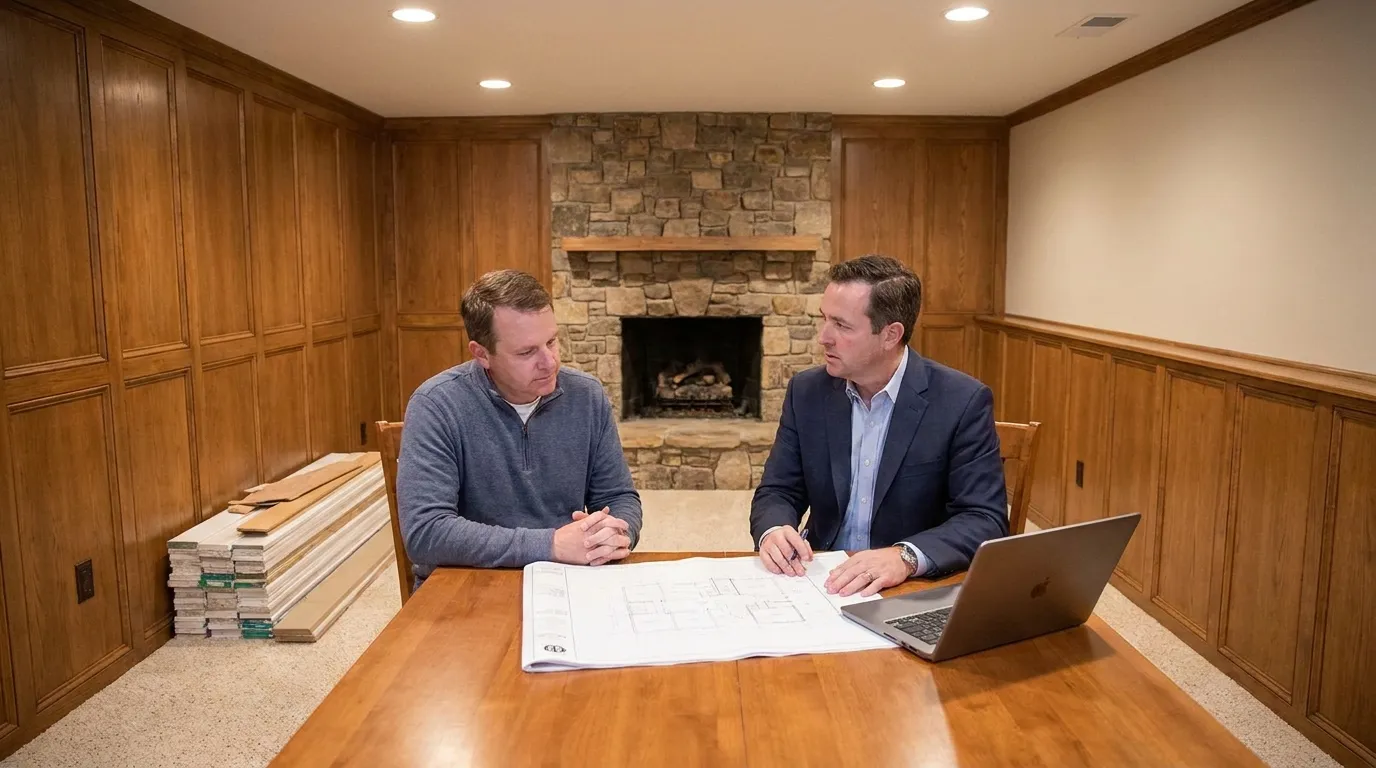
You can often sell a North Fulton home with unpermitted, undocumented, or unfinished work, but the right strategy depends on what was done, whether it creates safety or compliance concerns, and how it could affect the transaction.
A finished basement, converted garage, added bathroom, or structural renovation does not automatically make a home unsellable. Nor does the mere absence of a permit record establish that every improvement must be corrected before listing. The governing authority and the circumstances determine what is required.
Establish the facts early enough to decide whether to correct the issue, disclose and price around it, or position the property for buyers willing to undertake the necessary work.

First, Get Clear on Which Situation You Have
Not every permit question is the same problem. An unpermitted addition is different from an open permit that was never finaled, and both differ from work that may have been permitted when the file is missing or incomplete. Each can change how you market the home and what you disclose.
Situations that can come up include:
- Finished basements with added bedrooms, bathrooms, or wet bars
- Additions such as sunrooms, enclosed porches, or bump-outs
- Converted garages, attics, or bonus spaces now used as living areas
- Structural changes like removed or relocated load-bearing walls, installed beams, or modified framing
- System upgrades or replacements—HVAC, electrical panels, plumbing reroutes—that may have required permits
- Work completed by a prior owner with unclear or missing documentation
- Construction that was paused and never finished, leaving exposed framing, incomplete finishes, or unusable space
A missing permit is not, by itself, proof the work is unsafe. A permit on file is not, by itself, proof the work is sound. Treat each item as a fact to verify, not as a conclusion about quality or compliance.
Why Permit History Can Affect a Sale (Outcomes Vary)
The first issue is how you describe the space. If you are listing a basement bedroom and there is no record that the work was permitted or inspected, do not describe finished space, bedroom count, or bathroom count as if legal or appraisal status were confirmed. Whether a basement counts as gross living area can depend on measurement practice, lender guidelines, and local rules. A missing permit is a reason to avoid definitive labels. It does not, by itself, say how any particular standard will treat the space.
Unclear or unfinished work also tends to produce more questions during due diligence. Buyers may want something beyond a standard home inspection: an engineer, a code review, or a contractor's scope, so they can see what they would be taking on.
Unpermitted work does not automatically make a property ineligible for conventional financing. For example, Fannie Mae's appraisal guidelines specifically address additions without required permits. Appraisers are directed to comment on the quality and appearance of the work and its effect, if any, on market value.
That guidance does not guarantee loan approval. Safety, structural integrity, property condition, and other eligibility requirements may still affect the lender's decision. An appraisal is not a code inspection or a determination of permit status.
Financing and insurance are not automatic deal-breakers, and this is not necessarily a cash-only sale. Unclear work can still draw scrutiny. Policies differ. Document what you know and let the buyer's team review it.

Which North Fulton building authority governs your property?
North Fulton is not a single permitting jurisdiction. Homes in Alpharetta, Johns Creek, Milton, Roswell, Sandy Springs, and surrounding areas may fall under different authorities. Confirm the jurisdiction for your specific parcel and, where relevant, the authority that governed the property when the work was completed. A mailing address alone does not settle that question.
Start with the applicable building department. For example, Alpharetta's municipal resources provide a starting point for locating building and permit information. Roswell publishes guidance on when a permit is required and maintains building and inspection FAQs.
Verify requirements for the specific project and address. Older records may be incomplete or unavailable online, so a missing search result is not necessarily proof that no permit was issued. For local real estate context, see our North Fulton area guide.
Build a Pre-Listing Fact File (Before You Call for Inspections or Open Walls)
Before you contact the building department or hire anyone, list every project that changed the home. Note what was done, when it happened, who did the work, and whether anything is still unfinished.
Gather what you can find:
- Permits, inspection cards, or certificates of occupancy
- Architectural plans, engineering letters, or structural drawings
- Invoices, warranties, or contractor information
- Photos taken during or after construction
- Prior home inspection reports, appraisals, or surveys with measurements
- Closing documents from when you purchased, including any seller disclosures
Treat tax records, old listings, and prior appraisals as leads, not proof of approval. They can help reconstruct a timeline. They do not confirm permit status or code compliance.
Compare those records with what is visible in the house. Note finished space that does not appear on the original plans, rooms that do not show up in tax records, or work that still looks incomplete. For more on evaluating past renovations and major systems, see Evaluating Older Homes in Alpharetta and North Fulton.
If the issue is material—structure, a significant addition, or space that could affect value—ask for a narrow review: a contractor on scope and cost, an engineer or trade specialist on the technical question, a measurer if square footage is in doubt, and a Georgia real estate attorney on disclosure wording.
A general home inspection is a useful snapshot of visible condition. Do not treat it as a certification of code compliance or permit status. If aging equipment is a separate concern, our guide to an aging roof or HVAC in North Fulton explains how to weigh replacement, repair and documentation before listing.
When to Contact the Local Building Authority—and What to Ask (and Not Promise)
Call when the record is unclear, when a permit may be open or expired, when structural or systems work is involved, when finished or sleeping space could be misdescribed, or when you are seriously considering a correction before listing.
Have the address ready, along with dates of the work if known, contractor names, any permit numbers you have found, and photos of the finished condition or the work in progress. Describe the work objectively. Do not assume it complies.
Useful questions:
- What records exist for this address?
- Is there an open or expired permit on file?
- What process, if any, applies for final inspections or a review of past work?
- What documentation will the department require?
Do not promise retroactive approval or an inspection date you do not control. Do not assume past work can be permitted after the fact. Whether any after-the-fact process exists, and what it requires, is decided by the authority, not by a general rule in this guide.

Should you correct the work, disclose it, or target renovation buyers?
Start with safety and applicable requirements. Then compare each feasible sale strategy against cost, timing, buyer eligibility, uncertainty, and expected net proceeds.
| Strategy | When it may make sense |
|---|---|
| Correct before listing | Defined scope, safety or compliance concerns, feasible correction cost and sufficient time. |
| Document, disclose and sell | Understood condition, costly or uncertain correction, and a sale that can proceed subject to applicable requirements. |
| Target renovation or cash buyers | Extensive unfinished work, significant defects, uncertain correction scope or timing constraints. |
Correct before listing
Properly resolving a defined problem may reduce buyer objections and broaden financing options. Confirm the scope and applicable approval process before committing money. Include the risk that opening walls or additional inspections could expand the project. A higher sale price does not necessarily mean a higher net.
Document, disclose and price accordingly
When correction is not practical and a sale can lawfully proceed, describe the improvements and known concerns accurately, provide available documentation, and allow buyers to investigate. Set price and presentation around the actual condition and the likely cost and uncertainty a buyer will assume.
Position the home for renovation-minded buyers
A property with major unfinished work or an uncertain correction scope may be better positioned around its renovation potential. A cash buyer may avoid certain lender requirements, but cash financing does not resolve code, safety or disclosure issues. An as-is agreement is not permission to conceal known problems or misstate property characteristics. Discuss your specific disclosure and contract obligations with a Georgia real estate attorney.
Compare expected sale proceeds after correction costs, carrying costs, transaction expenses and likely concessions. Do not count on a last-minute credit to resolve a condition that a lender, insurer or governing authority requires to be addressed.
How to Describe and Document Carefully (Without Overreaching)
Organize a buyer-facing package by project. For each area, record what changed, when, who did the work, which records exist, what remains unfinished, what a specialist has evaluated, and what is still unknown.
Be precise in the MLS and in every other marketing piece. Distinguish finished space, conditioned space, sleeping space, and unverified space. Avoid "permitted," "legal living area," "code-compliant," and "insurable" unless the governing authority, or a licensed professional qualified to say so, has confirmed the claim.
Keep disclosures, listing remarks, and conversations with buyers, inspectors, appraisers, lenders, and insurers consistent with the fact file. Programs differ, so do not offer assurances you cannot verify. If a lender or insurer has questions, point them to the file and let them decide.

Mistakes That Make the Problem Worse
A few common missteps can make a documentation issue harder to manage and, depending on the facts, may raise disclosure questions. These are cautions, not a finding that liability exists in any particular sale:
- Hiding or overstating finished living area, bedroom count, or bathroom count when the status is unclear
- Assuming a prior sale, tax record, or contractor's verbal assurance proves compliance or permit approval
- Opening walls or filing a permit without a plan for scope, timing, inspections, and completion
- Giving different explanations to buyers, inspectors, and lenders
- Promising retroactive approval or a completion date you do not control
- Treating "buyer to verify" language as if it cures an affirmative misstatement you have already made
- Starting demolition or a partial renovation just before listing and creating a new incomplete project
- Assuming a cash buyer resolves disclosure questions or waives whatever duties may apply
If several issues overlap, plan them together. A complex property situation is easier to handle when construction facts and sale strategy are considered at the same time.
Your Pre-Listing Checklist and Questions to Ask
Before you list:
- Identify every project or space that has changed since the home was built.
- Build the fact file. Separate what you know from what you assume.
- Confirm the governing building authority for your address and search the available records.
- Get targeted specialist input where the issue is material: structure, systems, or square footage.
- Decide whether to correct now, disclose and sell with a precise description, or target renovation buyers.
- Draft consistent descriptions and disclosures. Consider having a Georgia real estate attorney review the language.
- Set price and positioning from the documented facts and the buyer pool you are targeting.
Questions for your team:
- To the local building authority: What records exist, what process applies to past work, and what documentation will you need?
- To contractors or engineers: What is the scope, feasibility, and likely timeline if this is corrected before listing?
- To your insurance agent: Are there policy considerations for known conditions or unverified work?
- To your real estate attorney: How should disclosures be worded in Georgia so they are accurate?
- To your listing agent: Which buyers fit this property, what should be published or provided on request, and what sequence makes sense for inspections and disclosure?
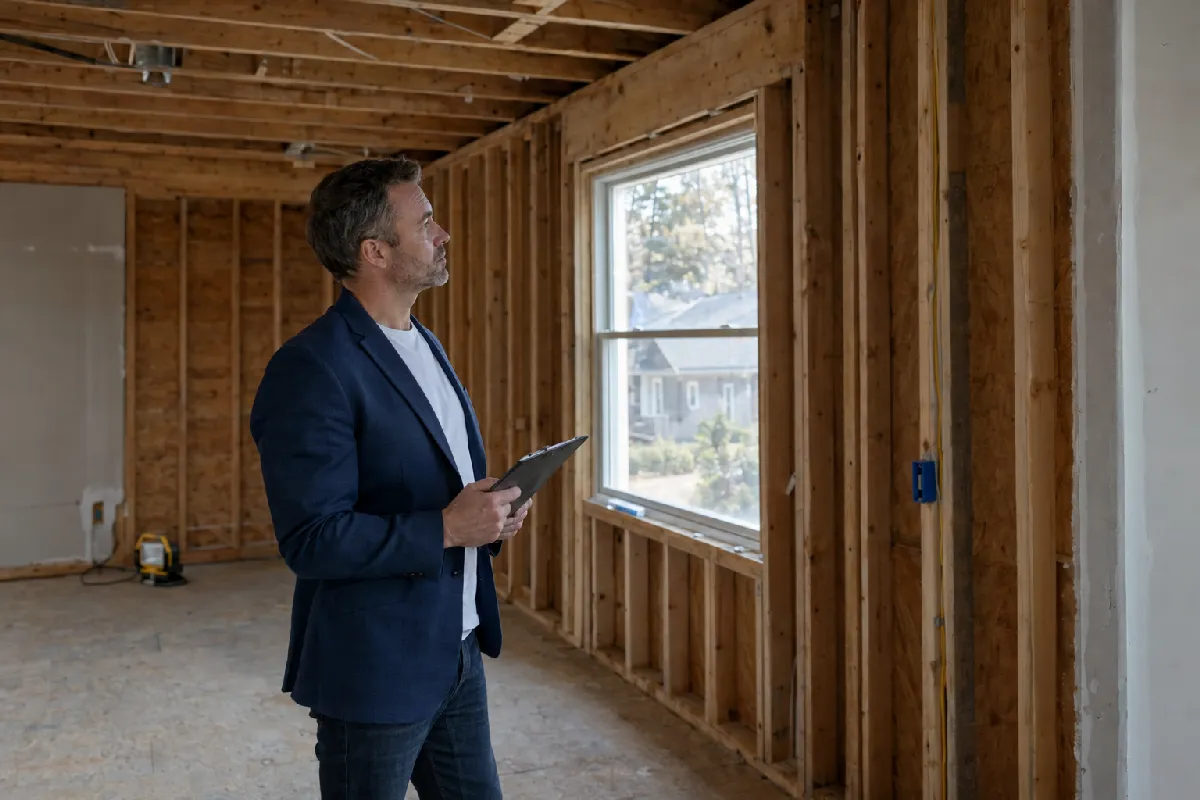
The practical takeaway for North Fulton sellers
Unpermitted, open, or incomplete work is often a planning problem, not an automatic crisis. Treat safety, structural, and systems concerns separately, and get a professional review before listing if those concerns exist. Then match the path to your timeline, budget, and tolerance for complexity.
A careful description and a consistent file can reduce uncertainty more reliably than assurances you cannot verify. That is a working approach, not a guaranteed outcome. Start early, and decide from what you can document rather than from what you hope a buyer will overlook.
This guide is general information, not legal, code, tax, insurance, appraisal, or lending advice. Processes and policies change. Always verify permit status and available options with the governing jurisdiction and consult qualified professionals before acting.
If your North Fulton home has unpermitted improvements, incomplete renovations, or construction issues that could complicate a sale, you do not necessarily need to start spending money before understanding your options.
Resideum Real Estate brings both brokerage and construction experience to these decisions, helping homeowners evaluate the condition, likely correction costs, buyer expectations, pricing, and potential net proceeds before deciding how to proceed.
Contact Resideum Real Estate to discuss your property, or learn more about our approach to Complex Property Situations.