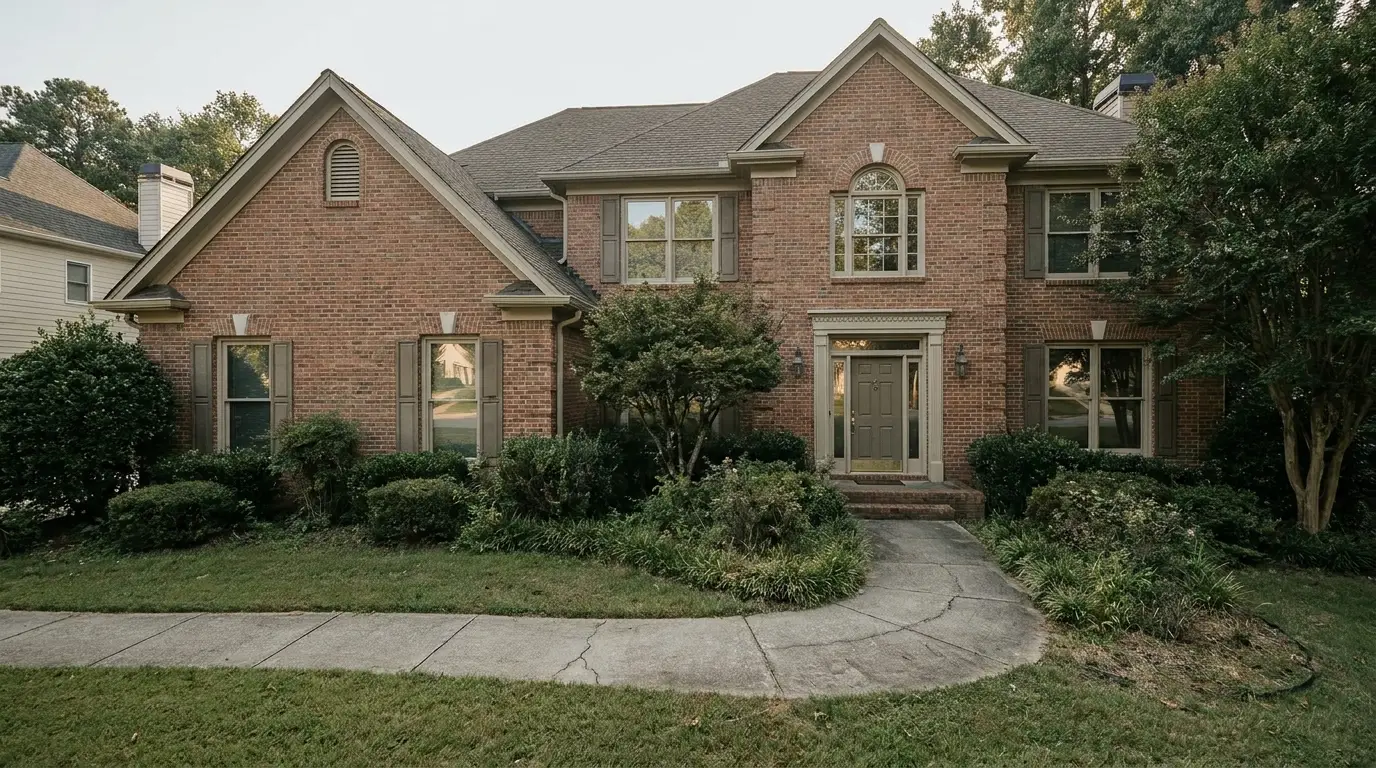
Many North Fulton homeowners face a practical decision before they list: sell in current condition, or put time and money into repairs first. The better path is not a judgment about the house or the owner. It is a net-outcome question, shaped by condition, the likely buyer, financing and insurance friction, timing, cost, inconvenience, nearby competition, and price.
The common mistake is treating the choice as all or nothing before the alternatives have been priced. This guide explains what an as-is sale means in practice, when it can be reasonable, and how to compare the options in Alpharetta, Milton, Johns Creek, Roswell, and nearby areas.
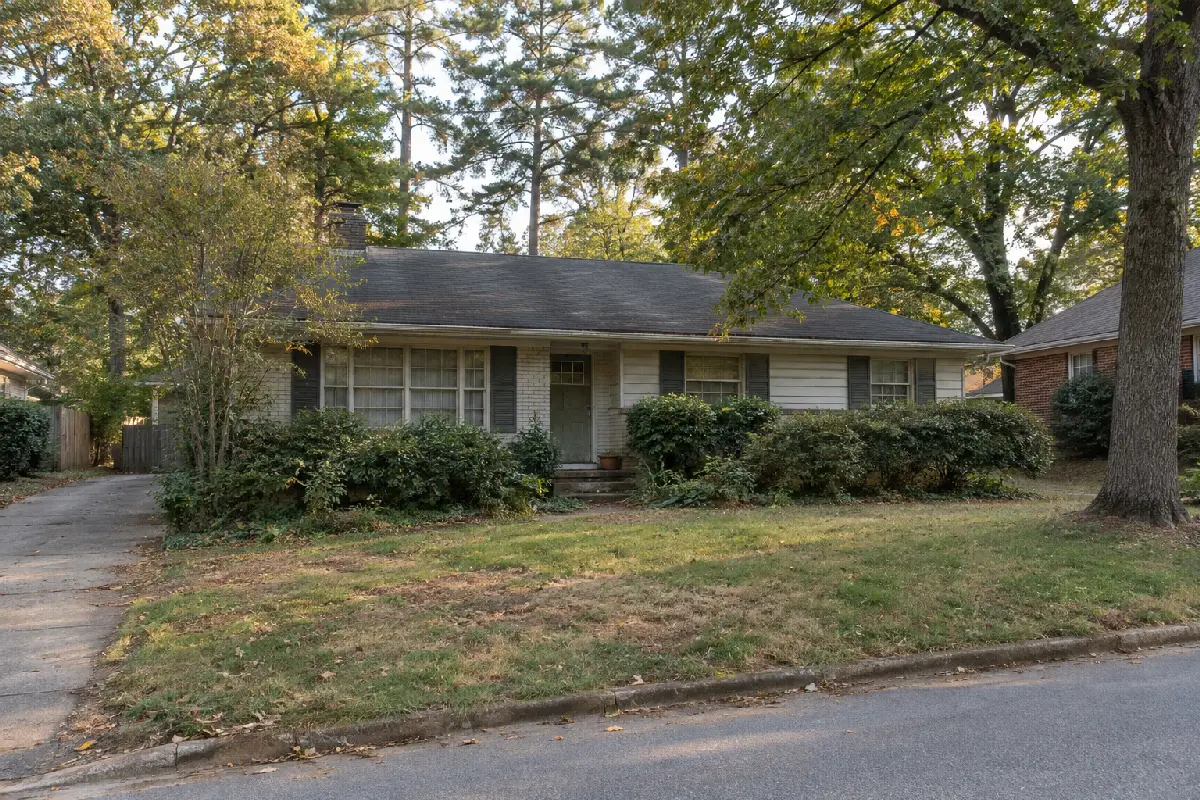
What "as-is" really means—and what it doesn't
When you offer a home as-is, you are defining a repair position. The house is offered in its current condition, and you do not plan to complete repairs, updates, or renovations before closing. You are not promising a discount, and you are not opting out of the rest of the transaction.
Buyers can usually still inspect. If the contract allows it, they may negotiate, request a credit or a price change, or walk away. As-is is not a pricing shortcut, not a marketing shield, and not a way around disclosure. Some buyers read the phrase as a warning of hidden trouble even when the issues are ordinary deferred maintenance. Clear condition, clear records, and a price that fits both will do more than the label.
Contract language governs the specifics. Review it with your agent and, where the situation calls for it, a Georgia real estate attorney.
Disclosure obligations: accurate, current, and organized
As-is does not eliminate disclosure duties. In general, sellers are expected to share known, material facts that are not obvious to a typical buyer. Avoid speculation. What you must disclose depends on Georgia law, the contract, and what you actually know.
Organize the record before you list:
- Dates of major systems
- Permits, if any
- Past leaks or repairs
- Invoices, warranties, and insurance claims
- Termite letters or treatments
- Septic records, where applicable
If a condition changes before closing, the contract may require an update to the buyer. Federal lead-based paint disclosure rules generally apply to residential sales of homes built before 1978, subject to exceptions. Confirm current requirements with your agent or attorney.
If you never lived in the home, whether an estate, a rental, or a property you inherited, disclose what you know. Do not guess at history you do not have.
When selling as-is can make sense
There are circumstances where selling in current condition is the better net result:
- Extensive or uncertain scope, where overruns or delays are a serious risk
- Limited time, capital, or willingness to manage construction
- A remote owner, an estate, tenants in place, or difficult access
- A vacant house, where delay adds weathering and carrying cost without a clear return
- Renovation upside that is modest next to the cost, time, and hassle of getting there
- A most likely buyer who is a renovator, and who will not pay for finishes they intend to replace
None of these makes as-is automatically correct. They are the situations where it should be compared honestly with doing some of the work, or more of it, rather than assumed away.
Carrying cost is easy to undercount. Taxes, insurance, utilities, basic upkeep, and any loan payment continue while contractors are scheduled, materials are delayed, or a permit sits in review. A project that looks sound on a repair estimate can lose that margin to time.
Cosmetic vs. consequential condition—and why financing and insurance may care
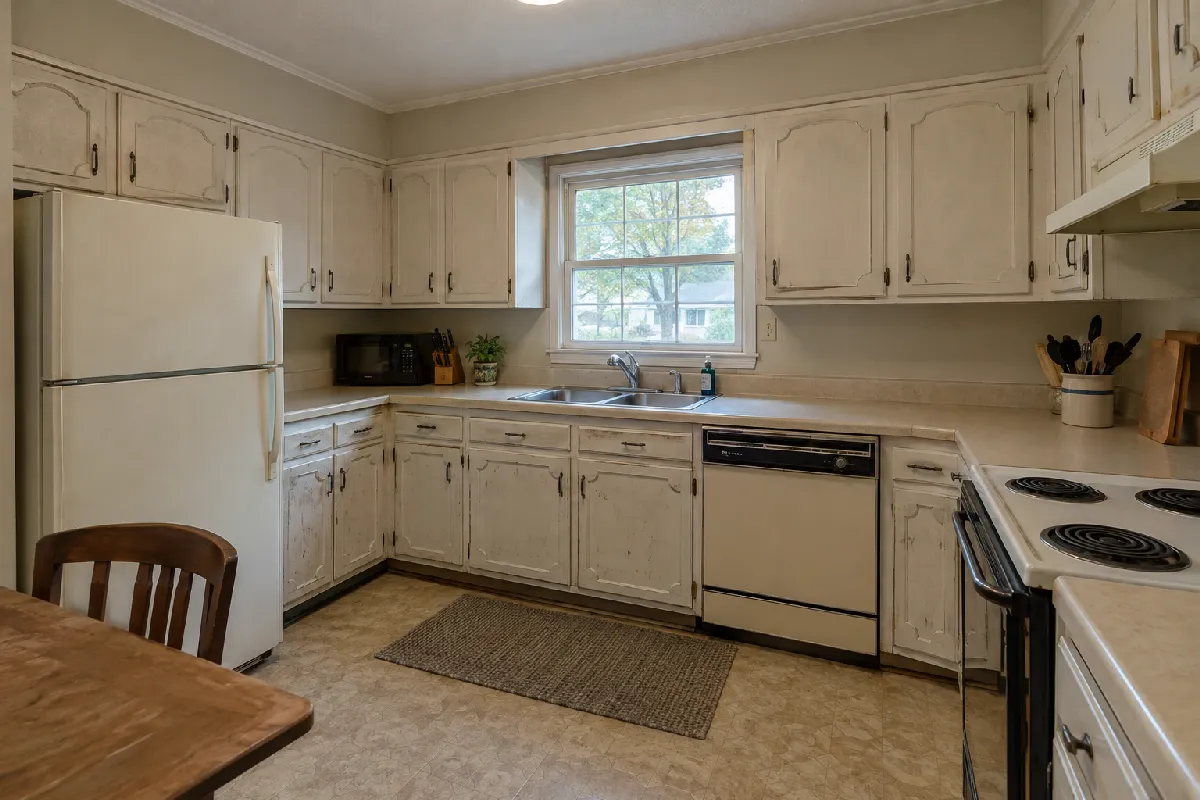
Cosmetic or dated but functional
Worn flooring, older appliances, dated paint or fixtures, and tired landscaping can reduce appeal. They often do not, by themselves, prevent occupancy or financing. Buyers comparing similar homes may prefer the updated one. That preference usually shows up in price and in how quickly the right buyer appears, not in a loan that cannot be made.
Consequential or habitability-sensitive issues
Active leaks, unsafe electrical, nonfunctional HVAC or plumbing, significant structural or moisture problems, and environmental or safety hazards are a different category. They can affect the inspection, the appraisal, and insurance. They can also narrow who is willing to buy, and on what terms.
Financing considerations, carefully qualified
Not every issue blocks conventional, FHA, VA, or other financing, and not every as-is home requires cash. Eligibility depends on how serious the issue is, where it sits, the lender and loan program, the appraisal, and whether insurance is available.
Some buyers may use renovation-oriented loans if the property and the program both qualify. A central question is whether condition prevents occupancy or insurability, or whether it fails a minimum property standard for that loan type. Cosmetic fatigue and a system that will not operate are not the same underwriting problem.
How condition shapes the buyer pool and negotiation
Lighter wear typically draws a broader pool of owner-occupants comparing nearby alternatives. Those buyers may negotiate on price or ask for cosmetic credits, but the house is still competing in the general market.
Heavier repairs narrow the pool to buyers who can take on the work: owner-occupants with reserves, investors, and builders, and buyers who may use renovation financing if it is available. A narrower pool can mean fewer showings, more conditional offers, and more inspection and appraisal friction. That does not imply a fixed discount. It does change which outcomes are likely, and a pricing plan has to cover that range.

Pricing an as-is property: strategy that fits condition and uncertainty
Use the right comparables and context
Look at similar-condition sales, renovated homes the buyer will also see, location and lot, layout, known defects, and the buyer you expect. Pricing a needs-work house against fully renovated sales, with no adjustment, can invite a weak response and a harder negotiation after inspection.
List price and expected net are not the same figure. A higher asking price that stretches into a long negotiation, an appraisal gap, or a second trip to market can net less than a price the right buyer can underwrite on the first pass.
Buyers price more than the visible fix
Many buyers factor scope that may grow, time, inconvenience, and project risk, not only a contractor estimate. A seller who starts from renovated value and subtracts a line-item repair list often misreads how buyers price uncertainty. The unknown item, and the weeks required to resolve it, are part of the number.
Credits vs. repairs
A seller credit can be a reasonable way to handle work the buyer is willing to own. It may not substitute for a repair a lender, appraiser, or insurer requires before closing. Treatment varies by program, lender, and appraisal. If a loan requires a working HVAC system, a credit in place of the repair may not clear the condition.
Selective repairs and preparation that often help (without over-improving)
You do not have to choose between doing nothing and renovating the house. Selective work can widen the buyer pool or reduce financing friction without paying for finishes a renovator will remove.
The risk in the middle is a partial project that satisfies neither buyer. Move-in buyers still see unfinished work. Renovators typically discount what you just installed, because they plan to change it. If the work does not remove a real barrier, it often functions as spent money rather than recovered value.
Consider:
- Stabilizing active damage—roof patching where water is entering, or drainage work that keeps it out
- Restoring essential function or safety—smoke detectors, handrails, or a basic plumbing or electrical repair that removes a barrier to occupancy or financing
- Making inspection and appraisal feasible—utilities on, clear access to the attic, crawlspace, and panels, and debris removed
- Documenting prior work and permits, so the buyer is not pricing a blank history
Skip taste-specific upgrades the next owner is likely to replace. If you are weighing a limited scope, ask whether it widens who can buy, reduces financing or insurance friction, or improves the expected net after cost, time, and carrying expense. For a closer look at that question, see property potential from limited work.

Your decision framework (and how North Fulton context fits)
10-point lens to compare "sell now," "selective work," or "larger renovation"
Before committing, test each path against the same factors. The point is comparison, not a score.
- Property condition: What is the current state, and what is likely to surface during inspection?
- Required vs. optional repairs: What must be resolved to close, and what is discretionary?
- Cost and time: What will the work cost in money, time, carrying expense, and disruption?
- Buyer pool: Who is most likely to buy, and what financing will they use?
- Financing and insurance considerations: Will condition limit loan types or insurability?
- Seller objectives: Price, speed, certainty, convenience, or limited cash.
- Market competition: Which nearby listings will buyers use as the comparison?
- Pricing strategy and likely concessions: Where is the negotiation most likely to land?
- Disclosure obligations: What do you know, and what must you share?
- Expected net outcome and probability of closing: Which path has the stronger expected result, and which has fewer ways to stall?
Local orientation for North Fulton
In Alpharetta, sellers may compete with newer or recently updated homes. When buyers can see a finished alternative in a similar school zone or commute corridor, presentation and price alignment matter more than a general claim of potential.
In Milton, acreage, outbuildings, wells or septic, and drainage or access—where those features are present—can affect inspections and financing. Focus on function and documentation, especially where those characteristics are unfamiliar to a buyer or a lender.
In Johns Creek, similar-home comparisons can be relatively tight. When layout, age, and location are otherwise close, a visible condition difference can shift preference.
In Roswell, housing age varies. Layout, lot, and renovation or redevelopment potential can matter as much as finishes, particularly in older pockets where teardown economics may influence how the property is priced.
Keep this local context qualitative. Condition, buyer pool, and financing realities vary within neighborhoods as well as across them. Do not assume a uniform rule.
Conclusion
Selling as-is is a legitimate strategy. It is not a shortcut, and it is not a failure. Choose the path with the stronger expected net and the cleaner route to closing, then make disclosure, preparation, and price agree with that choice.
Buyers will underwrite what they can verify. Surprises after contract are what slow a sale, not the decision to leave ordinary wear alone.

Next steps
If you are deciding between selling now, doing selective work, or taking on a larger renovation, test those options against the buyers and financing available in North Fulton, not against a renovated version of the house that does not yet exist.
The pages below go further on the questions above:
- Seller representation and pricing approach
- Complex property situations—estates, tenants, title or permit questions, unusual condition
- Renovation or property potential—when limited work could widen the buyer pool
- North Fulton orientation