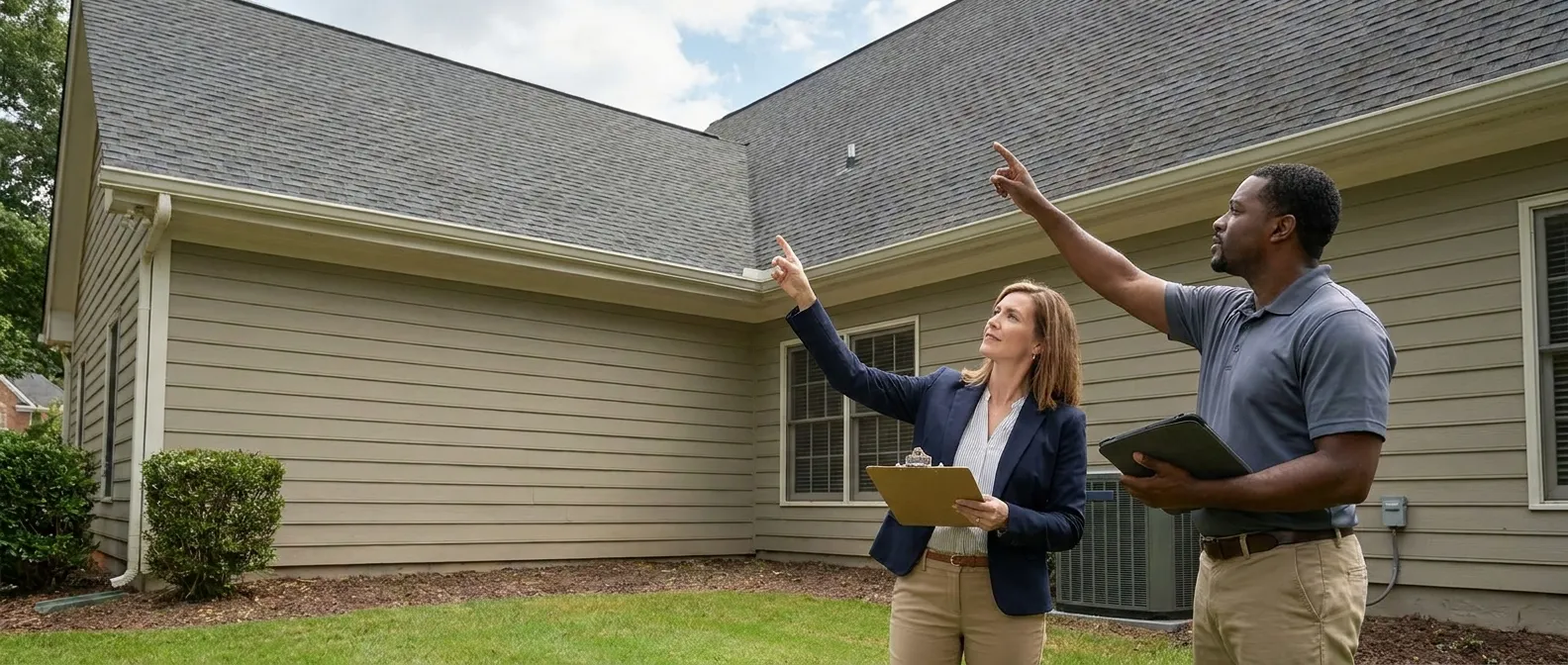
If you are selling in Alpharetta, Milton, Johns Creek, or Roswell and the roof or HVAC is aging, the useful question is not simply how old it is. The better question is whether its current condition will create more friction than a proper repair, replacement, disclosure, or price adjustment.
Four paths are usually on the table: replace, make a targeted repair, disclose with documentation, or price and credit around the issue. Condition, performance, buyer reaction, financing and insurance considerations, the competitive set, cost, timing, and your own sale goals all belong in that decision.
Start with condition, not the calendar
Age is a useful starting point. It is not a diagnosis.
Two roofs installed the same year can perform very differently because of installation quality, exposure, ventilation, storm history, tree cover, and maintenance. The same is true of HVAC equipment.
ENERGY STAR recommends considering replacement when air-conditioning or heat-pump equipment is more than 10 years old, but it also points to frequent repairs, rising operating costs, comfort problems, and poor performance as important signals. Age alone does not mean a functioning system should automatically be replaced.
Three distinctions help keep the decision practical:
- Chronological age versus current condition. A system can be old and functioning properly, or relatively new and poorly installed.
- Remaining useful life versus buyer tolerance. A roof may still be functional and still concern a buyer who expects a major expense soon.
- A single repair versus a pattern. One documented repair is different from repeated service calls that never address the underlying cause.
The goal before listing is to reduce uncertainty without spending money simply because a component has reached a certain birthday.
When does a roof replacement deserve serious consideration?
When replacement may be the cleaner path
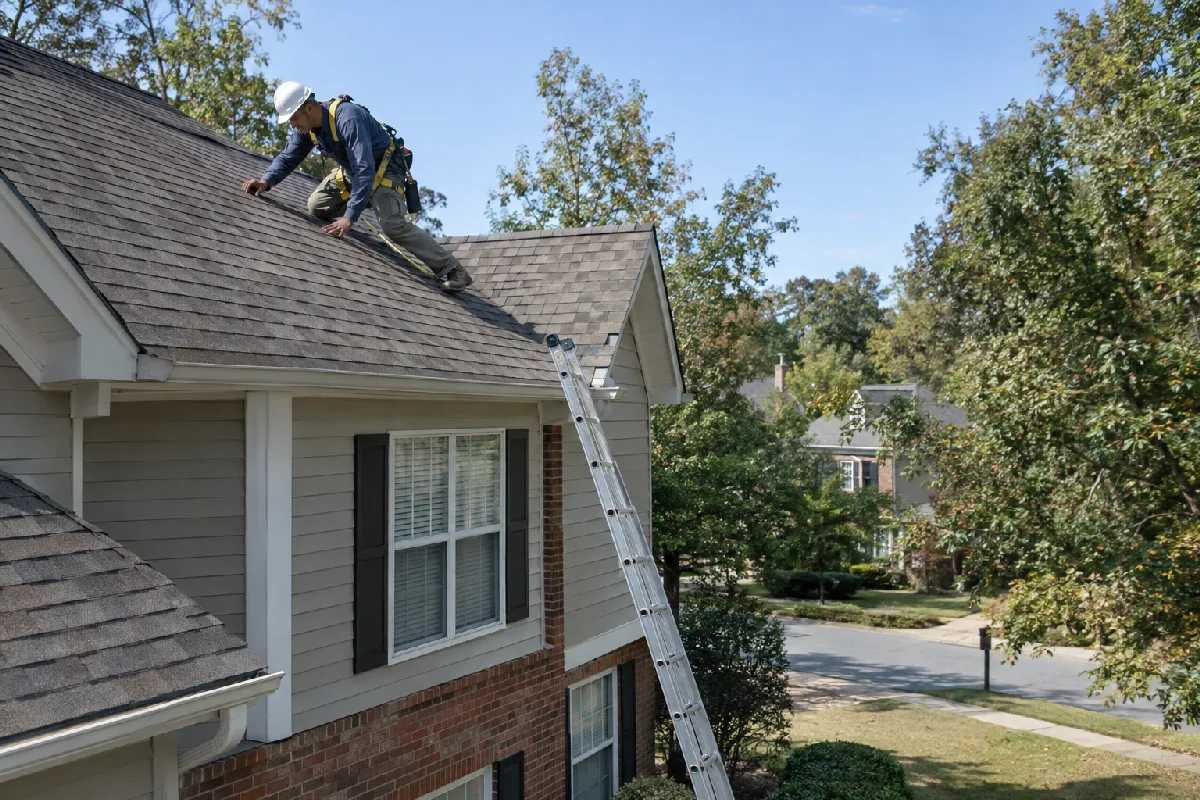
Replacement deserves serious consideration when there are active leaks, widespread deterioration, structural or decking concerns, significant shingle failure, installation defects, or a history of repairs that has not corrected the underlying problem.
Financing can also make condition more important. FHA is one useful example. HUD's Single Family Housing Policy Handbook 4000.1 contains FHA's current property requirements, including standards addressing roof condition and whether the roof provides adequate remaining utility. FHA guidance has historically required additional attention when a roof does not prevent moisture intrusion or has very limited remaining physical life.
That does not mean every buyer is using FHA financing, or that every older roof creates a lending problem. It does mean that active deterioration can become more than a cosmetic negotiation issue.
If replacement is completed before listing, preserve the documentation: invoice, scope of work, photos, warranty information, and permit or inspection records where applicable.
When repair or documentation may be enough
A localized issue—such as flashing, a pipe boot, or a limited section of shingles—may be better handled with a targeted repair when a qualified roofer confirms the underlying cause and the rest of the roof is performing properly.
If there are no active leaks, the roof is functioning, and you have repair or maintenance documentation, a full replacement may not produce an equivalent increase in sale proceeds.
Timing matters too. A replacement that delays the listing or consumes cash you are unlikely to recover may be a worse financial choice than completing a legitimate repair, documenting the condition, and pricing the home accordingly.
When should you replace the HVAC?
When replacement belongs in the discussion
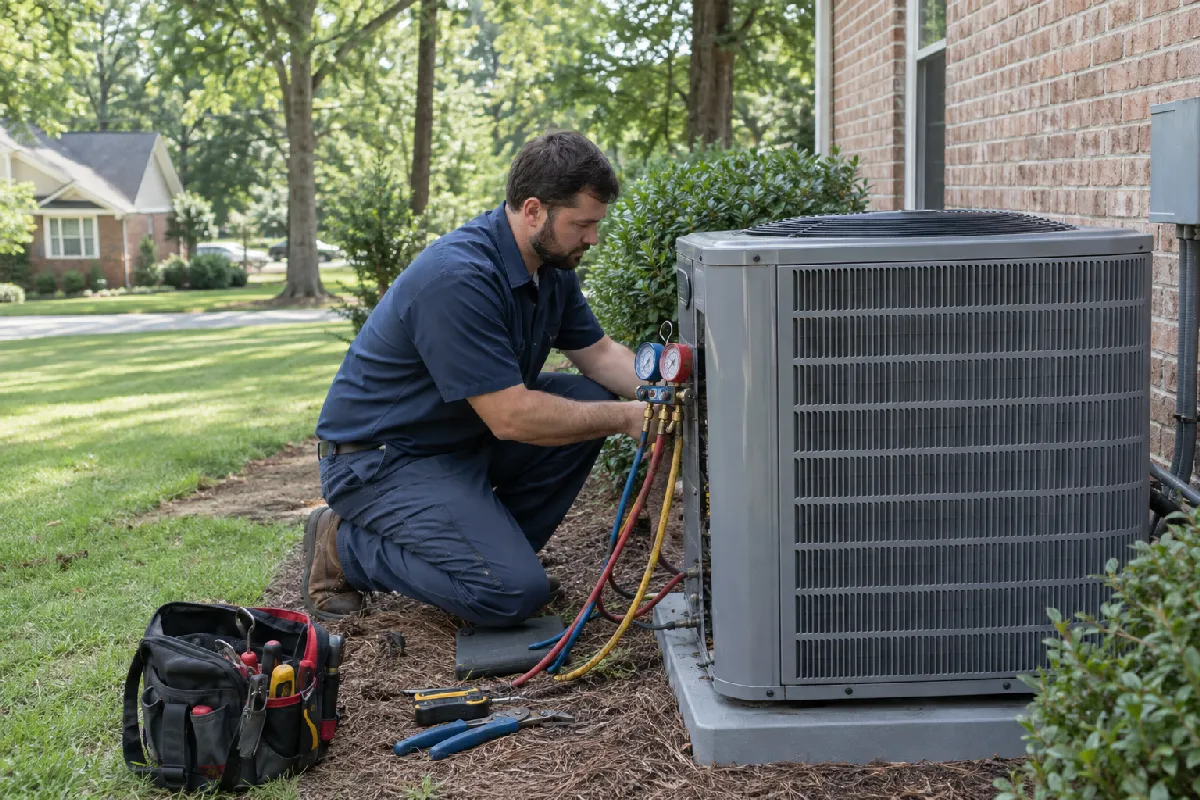
Replacement becomes more reasonable when the system requires repeated repairs, cannot maintain comfortable temperatures, has a major component failure, or a qualified HVAC contractor identifies an unsafe or materially deficient condition.
ENERGY STAR's current guidance is useful here because it does not treat age as an automatic replacement rule. It recommends having older equipment professionally evaluated and points to frequent repairs, comfort problems, and declining performance as signs that replacement may be justified. See ENERGY STAR's heating and cooling guidance.
Improper installation, duct problems, equipment sizing, or other system issues can also create poor comfort even when the outdoor unit itself is still operating. That is another reason to diagnose the system rather than simply replace equipment based on age.
When the existing HVAC may be enough
If the system heats and cools consistently, a recent service evaluation does not reveal a major issue, and maintenance has been reasonably documented, replacement before listing may not be necessary.
A specific repair may be more appropriate when the problem is isolated. A qualified HVAC contractor should determine whether the issue is a repairable component or evidence of broader system failure.
If buyers in the property's price range routinely accept older functioning equipment in exchange for location, lot, layout, or other features, replacing a working HVAC system can become money spent primarily for the next owner's benefit.
What records make an older system easier to sell?
Documentation reduces uncertainty.
Useful records can include:
- Service invoices.
- Repair invoices.
- Installation records.
- Photos of completed work.
- Warranty documentation.
- Contractor recommendations.
- Permit and inspection records where applicable.
A factual record is more useful than telling a buyer that a contractor said the system “should have several years left.” Remaining-life estimates are inherently uncertain.
Missing records do not prove that a system is defective. They do increase uncertainty, and buyers may respond to that uncertainty through price, inspection requests, or repair demands.
Who should evaluate the work?
Use the appropriate professional to determine cause, scope, and remedy.
Georgia regulates HVAC contractors through the state's Construction Industry Licensing Board, while roofing contractors are treated differently under state licensing rules. The Georgia Attorney General's Consumer Protection Division recommends checking applicable licensing, getting written estimates, verifying insurance, and keeping agreements and warranties in writing.
A pre-listing home inspection can also be useful when you want a broader view of the property before the buyer's inspection. Remember that information discovered before listing may affect how you handle repairs and disclosure.
How can an aging roof affect insurance?
There is no universal roof-age cutoff that applies to every Georgia homeowners insurer or every policy.
The Georgia Office of the Commissioner of Insurance and Safety Fire notes that homeowners policies and coverage terms vary by insurer and policy. The department has also taken action in the past when an insurer attempted to apply a blanket age-based roof nonrenewal rule to existing Georgia policyholders.
That is a good reason not to make broad promises such as “this roof will be insurable” or “a roof over X years old cannot be insured.”
If roof condition could affect a transaction, have the buyer or seller speak directly with the appropriate insurance professional before relying on an assumption.
How can roof or HVAC condition affect financing?
Lenders and loan programs can have property-condition requirements.
HUD's FHA program is one example. Its property standards require an appraisal to address conditions that affect safety, soundness, or the property's ability to provide reasonable future utility. Roof deficiencies can therefore trigger additional inspection or repair requirements under some circumstances.
Other loan programs and individual lenders may evaluate condition differently.
The practical lesson is not that an older roof or HVAC automatically prevents financing. It is that an active defect, safety problem, moisture intrusion, or failed system can create a lending issue that age alone may not.
Do not promise that a particular loan will approve the property. Let the lender and appraiser make that determination.

Does replacement automatically add equivalent value?
No.
Buyers generally evaluate the home as a whole. A new roof or HVAC system can improve confidence and remove a likely objection, but that does not mean the sale price increases dollar for dollar by the amount you spent.
The value of the work depends heavily on what the home's competitive set looks like.
If comparable homes already have newer major systems, an aging roof or HVAC may put your property at a disadvantage. If competing homes commonly have older but functioning systems, buyers may place more weight on location, lot, floor plan, updates, or overall condition.
This is why a pre-listing replacement decision should be tied to the market—not simply to an invoice.
What are the four practical options?
1. Replace
Replacement makes the most sense when there is a genuine defect, repeated failure, safety concern, or transaction obstacle that can be eliminated by completing the work correctly before listing.
The benefit can be greater buyer confidence and a simpler inspection period.
The tradeoff is cash, time, and the possibility that the market does not return the full cost.
2. Make a targeted repair
A targeted repair works when a qualified professional identifies a limited problem and can correct the underlying cause.
This approach can preserve cash and listing timing without ignoring a legitimate defect.
The key is that the repair must be real. Cosmetic patches that conceal an unresolved condition usually create more concern when discovered later.
3. Disclose and document
This can work when the system is functioning, the condition is understood, and replacing it is unlikely to improve the seller's net result.
Provide accurate records and avoid making promises about remaining useful life.
Questions about a seller's specific disclosure obligations should be addressed with the listing broker and, where needed, a Georgia real estate attorney.
4. Price or credit around the issue
A price adjustment or negotiated credit can make sense when timing and liquidity matter more than delivering a newly replaced system.
It also gives the buyer control over contractor selection and specifications.
The limitation is that a credit does not eliminate the underlying condition. Financing, insurance, or appraisal requirements may still need to be satisfied before closing.
What should you avoid?
Do not replace a system solely because it reached an arbitrary age if condition and the competitive market do not justify it.
Do not conceal staining, leaks, recurring failures, or other known problems.
Do not complete rushed work that creates new questions about workmanship, permits, warranties, or documentation.
Do not promise a buyer that a roof or HVAC system has a specific number of years remaining unless a qualified professional is willing to make and support that representation.
And do not promise that a property will qualify for a particular loan or insurance policy. Those decisions belong to the lender, appraiser, insurer, and other professionals involved.
Let the North Fulton competitive set help answer the question
Compare the property with similar listings and recent sales in Alpharetta, Milton, Johns Creek, and Roswell, matched as closely as possible for price range, size, lot, age, and level of finish.
Then ask:
- Are competing homes advertising newer roofs or HVAC systems?
- Are buyers in this price band expecting turnkey condition?
- Are older systems common among comparable homes?
- Does this home's location, lot, layout, or condition offset an older major system?
- Are comparable transactions resolving major-system concerns through repairs, replacement, credits, or price?
A home competing directly with newer construction may require a different strategy from one in an established neighborhood where buyers expect some systems to be older.
A pre-listing sequence that can limit overspending
Step 1: Get the appropriate evaluation. Ask the roofer or HVAC contractor for the cause, current condition, repair options, and replacement recommendation—not simply a bid for the most expensive solution.
Step 2: Separate active defects from ordinary aging. A failed component, a near-term concern, and a functioning older system are three different issues.
Step 3: Compare the four paths: replace, repair, disclose, or price around the condition. Test each against cost, time, likely buyer reaction, and your sale objective.
Step 4: Assemble the documentation. Collect service records, invoices, photos, warranties, and applicable permits or inspections.
Step 5: Develop the disclosure strategy with your listing agent and obtain legal advice when the facts warrant it. Do not assume an “as-is” sale eliminates every disclosure issue.
Step 6: Price the home against the actual competitive set. If the property has an aging system, make sure the price and negotiation plan reflect how buyers are likely to view it. If you completed replacement work, market it accurately without assuming the expenditure adds the same amount to value.
The same framework can be applied to water heaters, electrical systems, plumbing, drainage, and other significant components: determine whether the condition will create more friction than the cost and effort required to address it before listing.

The practical takeaway for North Fulton sellers
Replacing an aging roof or HVAC system before selling is not automatically the right answer.
Start with actual condition and performance. Determine whether there is a real defect or simply an older component. Understand how buyers, lenders, insurers, and the competitive market are likely to respond. Then compare the cost and timing of replacement with repair, documentation, disclosure, or a pricing strategy.
An informed decision made before listing usually produces a better result than discovering the issue during inspection and making an expensive decision under contract pressure.
If you are preparing a North Fulton home for sale and want help deciding which improvements are likely to matter to buyers—and which may not improve your net result—contact Resideum Real Estate.