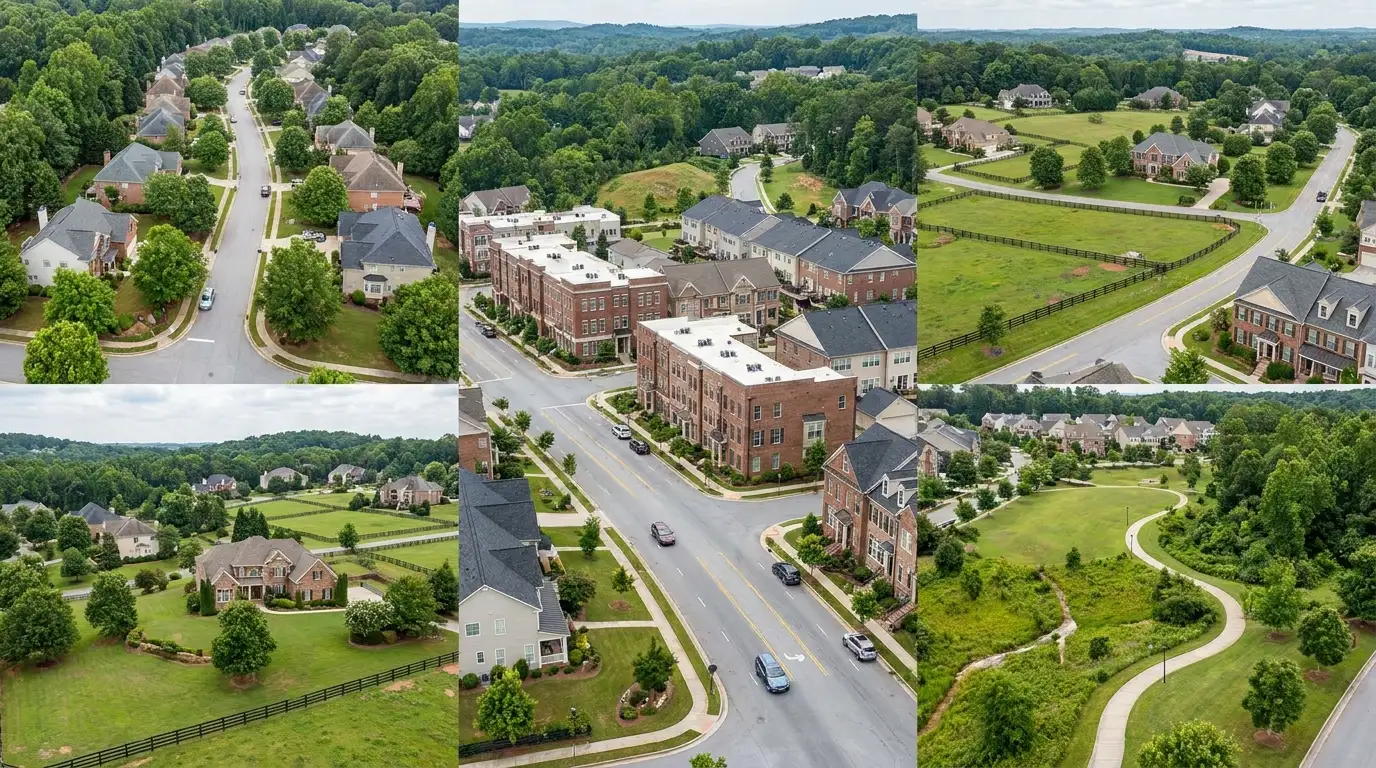
If you have narrowed a move to North Fulton and still cannot tell which city fits, the city name is doing too much work. Alpharetta, Milton, Johns Creek, and Roswell each fold very different houses, lots, street patterns, and daily routines into a single label.
Two similarly priced homes can produce different ownership: a newer house on a smaller lot near restaurants, or an older home with more privacy, more land responsibility, and a week organized around the car.
This guide does not rank the four cities. It asks you to define the ownership experience you want, then test neighborhoods and properties in Alpharetta, Milton, Johns Creek, and Roswell against that profile.
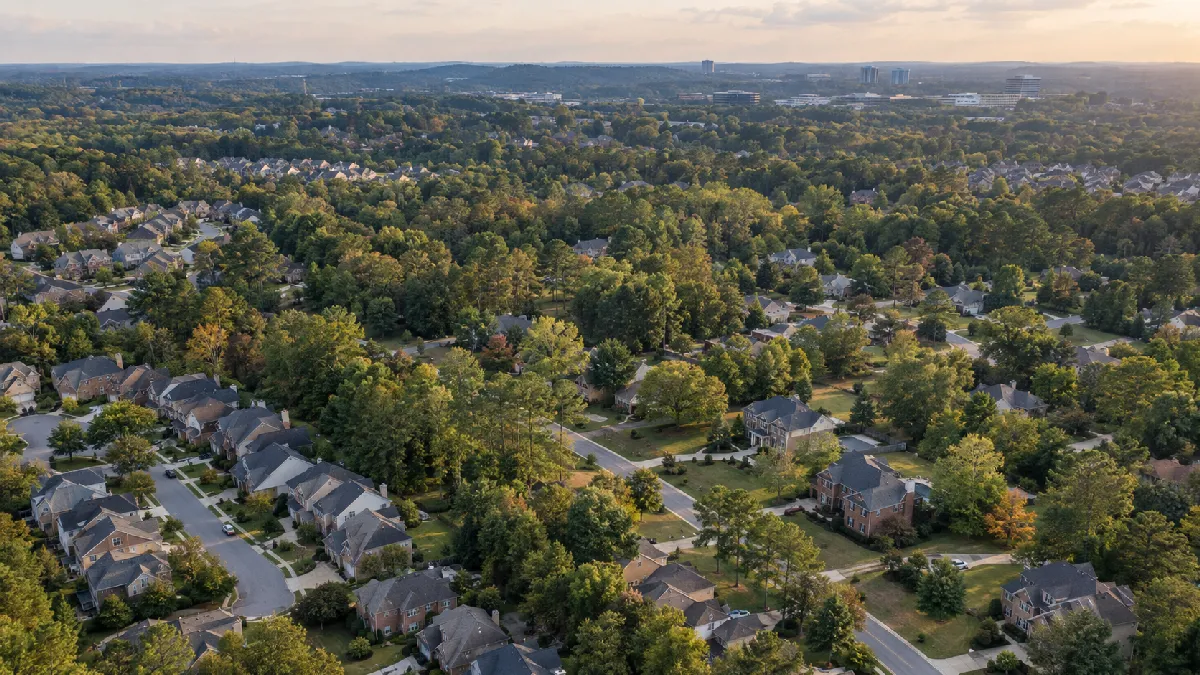
Decide on the Ownership Experience First: Build Your Property Profile
Before comparing cities, decide what you actually need from a property:
Housing type: Detached or attached, multi-story or main-level living, and how much garage and storage—basement, attic, or neither—you will use.
Age and condition: Newer construction or an established home, and what “updated” has to mean. Cosmetic finishes are not replaced systems.
Lot and privacy: The size you want, what you can maintain, and how much visual and audible separation you need. Acreage on paper is not usable, private space.
Neighborhood pattern: An HOA with amenities and rules, or a less uniform street without shared facilities. Both have tradeoffs.
Walkability and access: Is walking to restaurants or groceries a requirement or a preference? Do you need park or trail access, or only occasional use?
Daily travel: Work, school or childcare, groceries, medical appointments, and airport runs—who goes where, how often, and at what times. One congested corridor can shape the week.
Noise tolerance: Distance from major roads, activity centers, and events. Some buyers want to be near the activity; others need a buffer.
Flexibility: Will the house still work if a work location changes, the household shifts, or mobility becomes a concern?
A clear profile makes neighborhood comparisons faster. If you are relocating from outside the area, a structured approach to North Fulton relocation can keep the search on properties that match those priorities.
How Alpharetta, Milton, Johns Creek, and Roswell Tend to Differ—and Where Tendencies Break
Alpharetta: The Broadest Product Mix, Pocket by Pocket
Alpharetta often holds the widest range under one city name: established subdivisions, newer houses, townhomes and other attached options, and homes within walking distance of concentrated retail and dining, particularly near Downtown Alpharetta and Avalon.
Lot size and density shift from tighter communities near activity centers to quieter subdivisions with more separation. Proximity to Georgia 400 interchanges can shape the day, and which side of the city you are on can matter more than the city label.
Test walkability route by route. Event and restaurant traffic, parking, and congestion near mixed-use development are part of the location, not a surprise to discover after closing. A couple of blocks from Avalon and a couple of miles from it are different ownership experiences.
For a closer look at the city’s varied neighborhoods, see the Alpharetta real estate overview.
Milton: More Space and Quieter Settings—Alongside Classic Subdivisions
Milton is often associated with larger lots and lower visible density. That is a tendency, not a rule. Estate-style and equestrian-influenced parcels sit alongside conventional planned subdivisions.
The usual tradeoff is space and privacy against more driving and more land responsibility. A larger lot is not automatically less work. It is different work: mowing, trees, drainage, fencing, and the time it takes to leave the property.
On a specific parcel, look at driveway length and turning room, slope and drainage, tree and landscape load, fencing and outbuildings, and whether access is a private road or shared drive. Where applicable, verify septic or well systems and their maintenance history. More land usually means more decisions, more ongoing cost, and more items that can need attention.
If larger lots or a quieter setting are the point, review current Milton real estate options for what the ownership package actually includes.

Johns Creek: Planned-Subdivision Variety and Renovation Choices
Johns Creek is built largely around planned neighborhoods, many with shared amenities. Newer construction, attached options, and smaller activity pockets appear as well.
Conventional suburban lots are common. Large-acreage properties are less typical than in parts of Milton, though exceptions exist. Amenity load and social character still vary by subdivision: one street can feel active and programmed, the next much quieter, even when the houses and lots look similar on paper.
The practical decision is often renovation tolerance. Original condition, partial updates, a full renovation, and newer infill can all sit inside a similar suburban form. Your tolerance for work—and the calendar and budget it requires—often matters more than the city name.
To compare neighborhoods and current inventory, review the Johns Creek real estate landscape.
Roswell: Visible Variety in Era, Setting, and Street Character
Roswell often changes from block to block: older houses under mature trees, proximity to Downtown Roswell and Canton Street, river and park access, conventional subdivisions, townhomes, and infill.
Lot size and density can shift from one street to the next. Some blocks feel intimate and leafy; others read as standard suburban. That variety is the appeal and the risk. “Updated” may mean finishes, not systems. “Historic” and “walkable” do not apply citywide.
Judge the property first, then the street. Square footage and curb appeal do not describe the roof, HVAC, windows, drainage, or electrical panel.
Comparisons That Cut Across City Lines
Established Neighborhoods Versus Newer Development
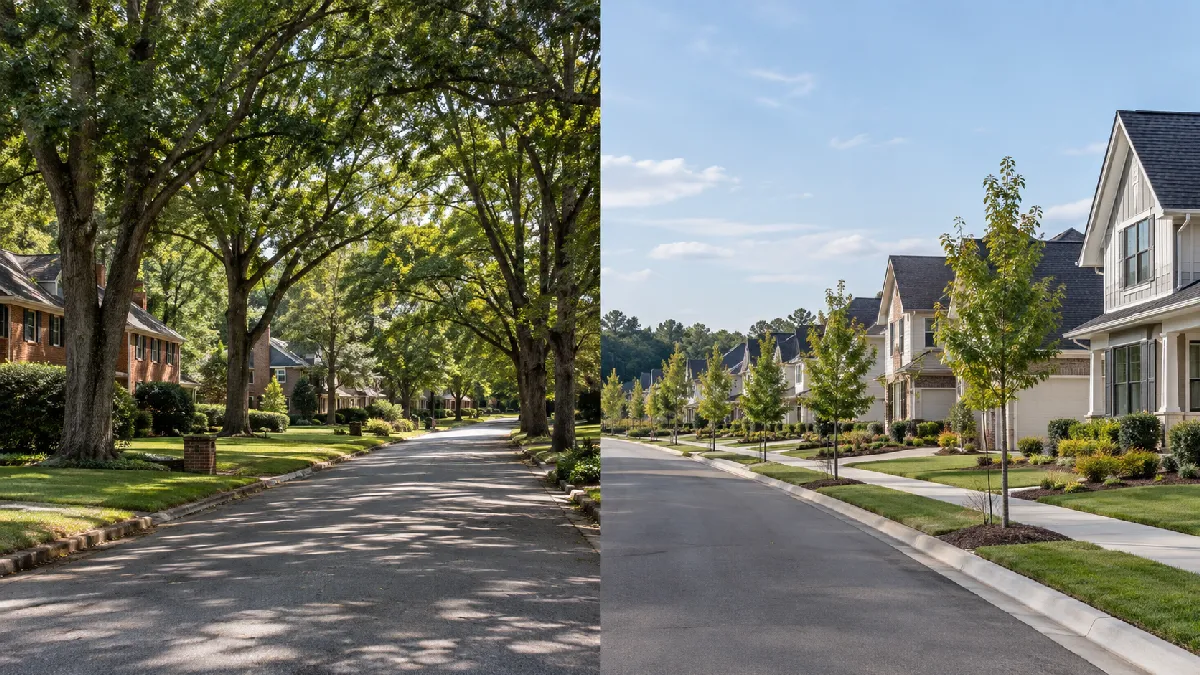
Established neighborhoods often offer mature trees, settled streetscapes, and sometimes larger or irregular lots, and they are often closer to older commercial districts. They can also bring older roofs, HVAC, windows, and drainage, dated floor plans, and aging subdivision amenities.
Newer development often offers contemporary layouts, newer systems, a lower near-term repair load, and planned amenities. It more often means smaller lots, closer spacing, HOA rules and recurring fees, and nearby construction or future phases that can change traffic and views.
Neither is inherently better. Renovation tolerance, lot priority, and how much ongoing construction you will accept decide the fit.
Lot, Privacy, and Density: Read the Parcel, Not the Acreage
What matters is usable, level area versus slope; drainage; tree cover and winter screening; setbacks and easements; and what the lot backs to. Walk it in daylight and after dark. Lighting and street activity change the feel of the same parcel.
Look past the fence line. Adjoining land may be protected open space, fully built out, or still developable. A wooded view is not always a permanent buffer.
Density you feel includes street width, on-street parking, shared-amenity load, nearby attached housing, and how hard it is to leave the neighborhood at peak times. A larger lot can still feel tight if the street is narrow, heavily parked, or the only exit feeds a congested road.
Walkability in Practice Is a Route, Not a Radius
Walking inside a subdivision, walking to a park or trail, and walking to errands or restaurants are different experiences. A map radius does not tell you which one you have.
Test sidewalk continuity, crossings, traffic speed, lighting, and grade. A route that works on a mild Saturday may not work on a weekday, in heat or rain, or after dark.
Mixed-use pockets such as Downtown Alpharetta, Avalon, and Canton Street can shorten some trips. They can also add event traffic, parking competition, and weekend activity. Decide whether you want to live inside that activity, near it with occasional access, or buffered from it.
Home Age and Renovation Tolerance
Separate three kinds of work: cosmetic (finishes and paint), functional (layout, storage, and how the kitchen and baths actually work), and capital (roof, HVAC, windows, drainage, electrical, plumbing, and structure).
Ask what was permitted, who did the work, and whether warranties transfer. An inspection documents conditions. It is not a promise that systems will hold or that earlier work was done correctly.
A well-maintained older house can be easier to own than a neglected newer one. Budget cosmetic work and systems work as different projects.
Judge Daily Travel the Right Way—Without Generic Commute Times
Map the actual addresses and test real departure and return windows, in both directions, for work, school or childcare, groceries, medical appointments, and airport runs. A published average commute does not describe your street at your hour.
Name the corridors that will shape the week: Georgia 400, Holcomb Bridge Road, Old Milton Parkway, Medlock Bridge Road, State Bridge Road, and the local connectors between them. An interchange that looks close on a map may not be convenient if you have to cross congestion to reach it.
If two adults travel in different directions, test both trips. Notice whether the routine depends on one congested road with no practical alternate.
Transit, where it exists—MARTA or Xpress bus service, for example—is trip-specific. Do not assume useful service from a typical residential address. If it is part of the plan, verify the route and schedule from that address.
Major corridor projects can change construction impacts and future patterns. Treat them as uncertainty, not a promise of a faster trip.

Price Is Not the Whole Package: What Similar List Prices Can Hide
The ownership package includes lot size and privacy, home age and remaining system life, renovation quality, how useful the garage and basement actually are, road noise, HOA rules and fees, amenities you will use, land maintenance, and how car-dependent ordinary days will be.
Verify property taxes, insurance, and HOA dues or assessments for each property. Do not estimate them from a city average. A lower purchase price can cost more to own if systems need replacement, the lot requires ongoing work, or the association has deferred maintenance and upcoming assessments.
Think past closing: purchase price, near-term repairs, ongoing maintenance, recurring costs, daily travel time, and whether the house still works if life changes.
As a contrast, not a prescription: a newer home on a smaller lot near restaurants, with an active HOA and regular event traffic, is a different week from an older home on a larger, quieter lot with tree work, drainage responsibility, and a planned systems calendar. Only one of those matches a given buyer’s priorities.
Common Mistakes Relocating Buyers Make in North Fulton—and How to Avoid Them
Choosing by city reputation instead of the specific house and street.
Treating acreage as privacy without checking usability, screening, slope, and what sits behind the tree line.
Assuming “near restaurants” means a workable weekday walk. Test the route.
Underestimating the cost, calendar, and decisions involved in functional or capital work. Finishes are not systems.
Ignoring HOA rules, fees, and amenity load until they show up in daily life and the budget.
Skipping nearby vacant land, approved rezoning, or planned road changes that could alter the setting.
Testing the drive on a weekend instead of during real weekday departure windows.
Assuming every part of a city shares the same character, walkability, or access. It does not.
Questions to Answer Before You Narrow Your Search
How much driving is acceptable for ordinary errands?
Is privacy more important than being near restaurants and retail?
Do you want a newer house, or an established setting that may need work?
How much renovation—cosmetic, functional, or capital—can the budget and calendar absorb in the first few years?
Is the lot usable, or mostly slope, easements, and maintenance?
Do you want planned amenities and HOA rules, or a less uniform street with fewer restrictions?
Does walkable access have to work on a weekday, or is occasional weekend use enough?
Which routes must work, for whom, and at what times?
What nearby vacant land or road project could change the setting or the traffic pattern?
Will the house still fit if work location, household size, or mobility changes?
School attendance zones and local conditions are property-specific. Verify them with official sources rather than city boundaries or online estimates.

Conclusion
The useful question is not which city is best. It is which combination of house, lot, neighborhood pattern, and daily travel fits the life you are actually living.
Build the property profile, then compare specific neighborhoods across Alpharetta, Milton, Johns Creek, and Roswell against it. Judge the route, the lot, and the renovation load in front of you—not the label on the map.
If you want a calm, property-focused conversation about what is available and what fits, talk with Greg about your situation.