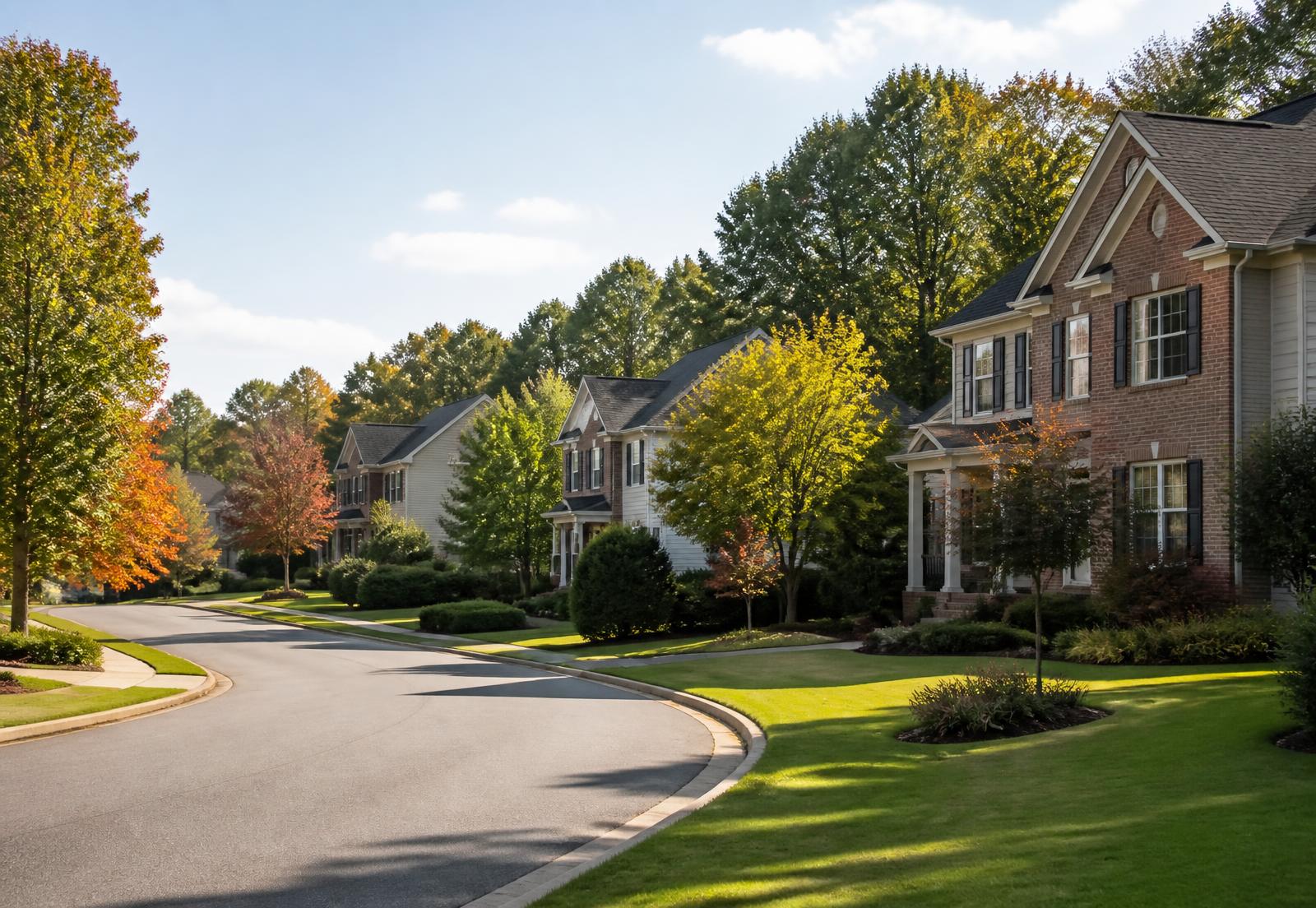
The subdivision sets the first frame
Street pattern, surrounding homes, neighborhood upkeep, community standards, and location within the development can shape expectations before a buyer reaches the front door.
Suwanee Real Estate
Homes in Suwanee can differ significantly in neighborhood setting, age, condition, renovation quality, lot characteristics, amenities, and future marketability. Resideum helps buyers and sellers understand which differences matter most.
Suwanee in Context
Suwanee is a Gwinnett County city where residential choices extend beyond one development era or neighborhood format. Established subdivisions, newer communities, townhomes, and individually updated resales can create different ownership experiences within the same general market.
The City of Suwanee identifies historic Old Town and Town Center as distinct parts of its downtown, with Town Center anchored by public park and gathering space. The city also maintains parks and greenway connections, including the Suwanee Creek Greenway. Those features may influence a location preference, but practical access and relevance should be verified for each address.
Adopted zoning, future land-use mapping, transportation planning, and neighborhood-level standards help frame the city’s physical context. For buyers and sellers, the useful analysis remains closer to the property: subdivision setting, surrounding homes, community obligations where applicable, condition, function, lot, and the choices competing for attention.
Local context is grounded in official City of Suwanee planning, zoning, transportation, downtown, parks, and greenway materials and Gwinnett County planning resources. Property boundaries, services, amenities, fees, rules, and access should be verified for the specific address.
Local Decision Insight
Buyers often evaluate the residence and the surrounding neighborhood experience at the same time. The work is understanding how those pieces reinforce—or complicate—one another without reducing them to a universal formula.
Street pattern, surrounding homes, neighborhood upkeep, community standards, and location within the development can shape expectations before a buyer reaches the front door.
Pools, clubhouses, trails, sidewalks, parks, or open space may add appeal where they exist, but buyers should also understand fees, rules, access, maintenance, and whether those features support how they expect to live.
Homes from a similar era can carry very different maintenance histories, exterior needs, major-system exposure, and levels of deferred work. A newer date does not replace a property-specific review.
Updated kitchens and baths may attract attention, while workmanship, design continuity, underlying systems, and unfinished areas determine whether the improvement feels complete.
Room flow, storage, flexible space, stairs, natural light, outdoor connections, slope, privacy, road position, and usable yard area can separate homes with similar headline features.
Condition, neighborhood context, maintenance demands, surrounding properties, location, and the breadth of likely buyer interest work together when a home returns to the market.
A compelling interior cannot make every setting equivalent. The strongest comparison accounts for the home, the neighborhood, and how buyers are likely to experience both.
For Buyers
Resideum helps buyers move from broad neighborhood preference to a disciplined property decision, coordinating the right diligence while keeping value, terms, maintenance, and future marketability in view.
Two homes with similar square footage can offer very different ownership experiences. Experienced guidance can help distinguish cosmetic appeal from factors that may affect maintenance, value, and future resale.
Learn About Buyer RepresentationFor Sellers
A strong sale strategy explains the home’s condition and advantages within the comparison buyers will actually make. Resideum connects preparation, renovation decisions, pricing, presentation, photography, offer evaluation, appraisal, inspections, and contract execution.
Before choosing a price or making improvements, understand what buyers are comparing your home against inside your subdivision and across the broader Suwanee market.
Explore Seller RepresentationThe Neighborhood Experience
Suwanee includes different community forms, and not every neighborhood offers shared amenities or the same ownership structure. Each feature should be confirmed and evaluated in the context of the specific property.
Street layout, density, common areas, surrounding homes, and the property’s position within the neighborhood influence privacy, convenience, and first impressions.
Pools, clubhouses, trails, sidewalks, parks, or open space may matter where offered. Their condition, access, rules, fees, and actual usefulness belong in the comparison.
HOA responsibilities and architectural or maintenance standards should be reviewed where applicable. A well-presented common setting does not eliminate the need to understand documents and obligations.
Renovation level, exterior condition, architecture, lot, and price should make sense within the setting. A home can be attractive in isolation yet compete differently when viewed beside nearby alternatives.
Connections to local services, parks, greenways, and activity centers can influence a buyer’s location choice, but availability and practical access should be verified for the specific address.
Preparation Decisions
Greg’s brokerage, investment, construction, and renovation background helps sellers test each possible project against the home, subdivision competition, likely buyer, timing, and risk.
Selective paint, flooring, and lighting can reduce distraction and connect spaces. The useful scope depends on existing condition and the standard set by competing homes.
Repair, refresh, or remodel only after considering timing, cost, disruption, current alternatives, and whether the work solves a meaningful buyer concern.
Entries, trim, visible roofing concerns, siding, landscaping, drainage observations, and general upkeep help form expectations about how the property has been maintained.
Known issues deserve attention while the seller still has options. Qualified inspectors and contractors provide technical findings; strategy determines how those findings fit the sale.
A major remodel is not automatically the best preparation. Greg’s construction and renovation perspective helps weigh scope, timing, risk, and likely buyer response without promising a return.
Suwanee Housing Context
Suwanee’s housing cannot be understood as one neighborhood type or one level of finish. A useful comparison changes with the setting, property, and objective.
Mature landscaping and known community patterns can be meaningful, while maintenance history, system age, updates, layout, and street position distinguish one home from the next.
Current layouts and finishes may appeal, but construction execution, lot placement, community buildout, fees, standards, warranties where applicable, and future competition still require review.
The analysis should move beyond the presence of updates to their scope, workmanship, consistency, effect on function, and the condition of what was not changed.
Parking, privacy, shared structures, exterior responsibility, fees, rules, amenities, and competing units influence both ownership and later marketability.
Architecture, finish continuity, outdoor living, systems, privacy, community position, and presentation often deserve more specific comparison than size alone provides.
A promising property should be tested against its layout, existing condition, restrictions, project complexity, timing, purchase basis, and likely finished position.
Some homes merit an investment lens that connects acquisition, improvement scope, carrying assumptions, demand, restrictions, and exit strategy without assuming every project works.
Suwanee Property Search
Search current Suwanee listings, then connect with Resideum for experienced guidance on value, condition, neighborhood context, amenities, negotiation, inspections, and risk.
Search All Suwanee HomesSeller Strategy
Before choosing a price or starting improvements, understand what buyers are likely to notice about both your home and its position within the neighborhood.
Experience Changes the Outcome
Across 37 years, nearly 9,000 transactions, and more than $1 billion in career transaction volume, Greg Kurzner has seen how neighborhood setting, condition, preparation, pricing, contract terms, and risk interact. That pattern recognition supports more useful comparisons, disciplined negotiation, earlier problem recognition, and practical execution.
Experience helps distinguish the feature that attracts attention from the factor that may change the outcome.
Local Resources
Continue with the live service, search, or nearby-market resource that supports the next decision. Future Suwanee guides can extend this collection naturally.
Suwanee Real Estate FAQ
The useful answer depends on the specific property, neighborhood, obligations, competition, and client objective.
Suwanee Real Estate
Whether you’re buying or selling, understanding the property in context can help you make a stronger decision about value, risk, and future marketability.