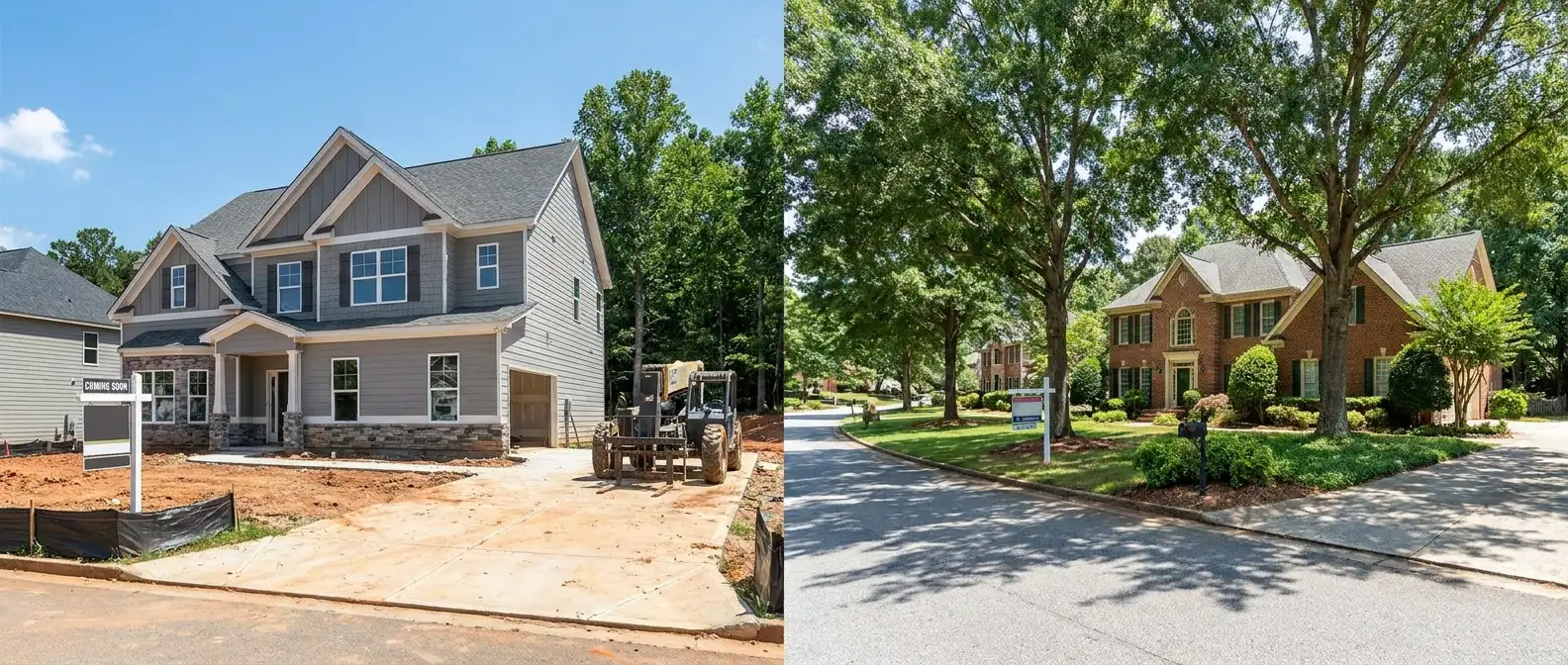
In Cumming and Forsyth County, the choice is rarely new construction versus resale in the abstract. Most buyers are comparing three paths: construction that has not started or is still underway, a recently finished home occupied for a short time, and an established house with years of operating history. Age will not settle the question. Workmanship, drainage, neighborhood maturity, and how the property will compete at resale have to be read on the specific property, against how you intend to live, maintain, and eventually leave.
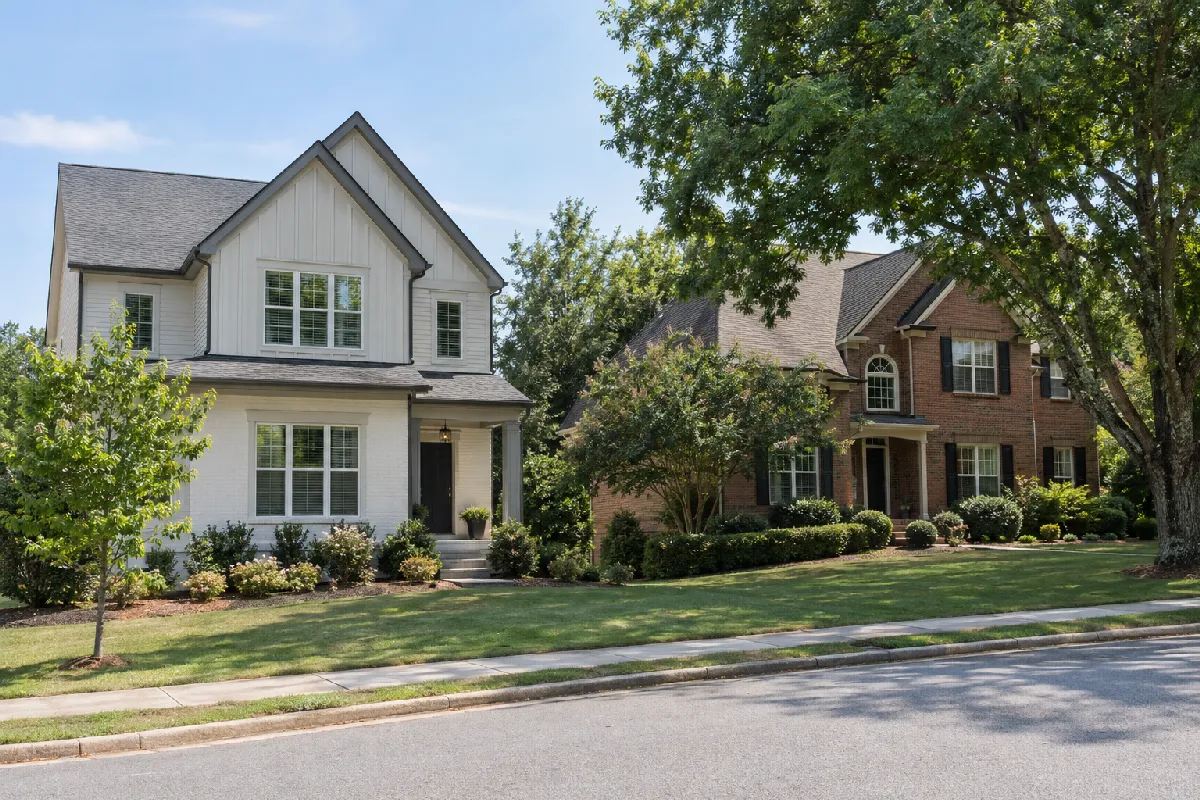
Start with the right categories—and what each one actually changes
The label matters less than what each path actually transfers to you, and what it leaves unresolved.
New construction (unstarted, under construction, or newly finished)
A new house can offer current components, a floor plan shaped around how people use space now, and, if you are early enough, room to change structural choices before they are locked. What you usually lack is a performance record: no wet season to show how the lot drains, no full summer to show how the house cools. The community may still be forming. That uncertainty is part of the purchase, not a side issue.
Recently built resale (finished, lived-in a short time)
A short-term resale can combine a current plan with a modest operating history. The first owner may have finished the yard, added hardscape, and lived through a few seasons. The street is usually easier to read than it was on the original listing. What you inherit are that owner's selections, and any punch-list items left open. Recently built is not the same as untouched. Permits, workmanship, and maintenance records still need to be checked.
Established resale (older operating history)
An older house can show you how it has actually behaved: seasonal moisture, mature landscaping, a readable pattern of ownership costs, and a neighborhood whose rhythm is already visible. The offset is age. Systems and finishes may be closer to replacement, and the layout may need work to match how you live. That is a budgeting question, not a reason to dismiss the house.
Judge build quality and workmanship—age won't do it for you
A young house can be carelessly built. A new one can be carefully built. Year built is a weak proxy for either. On any house, the review that matters is physical:
- Site grading and drainage behavior
- Foundation and structural elements
- Roof installation, flashing, and penetrations
- Window and door installation quality
- Exterior cladding transitions and weather barriers
- Decks, stairs, and railing attachment
- Attic insulation and ventilation
- HVAC equipment and ductwork
- Plumbing and electrical workmanship
- Flatwork, driveways, and retaining walls
- Moisture indicators inside and out
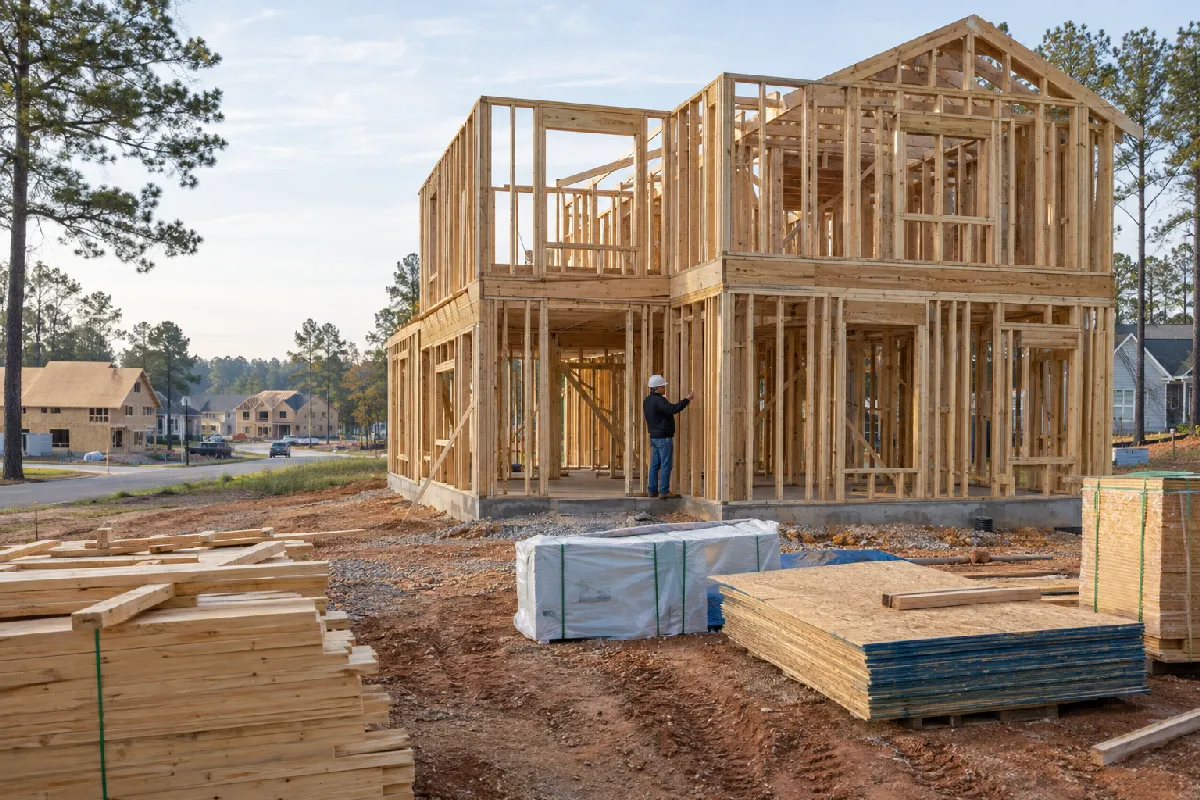
Municipal inspections and a builder walk-through are not a substitute for your own. On new construction, the contract and site access decide what you can see. Where the agreement allows it, consider a pre-drywall inspection, a final inspection before closing, and a follow-up after occupancy. Add a specialist for foundation, HVAC, or drainage when the site gives you a reason. Keep photos, written reports, and a punch list, and track each item to a documented close.
The lot often outlasts the finishes—get it right
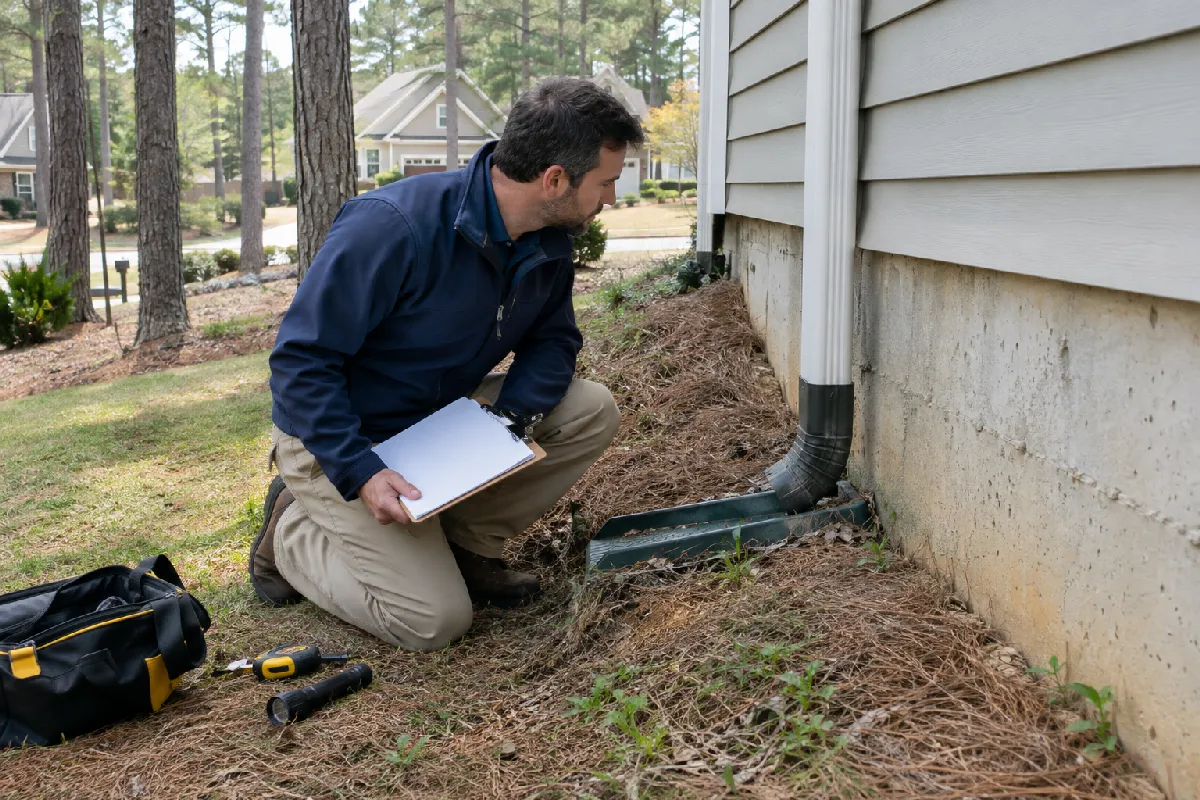
Finishes can be replaced. A lot that drains poorly is often much harder to correct. In Forsyth County, slope, usable yard, and what lies just beyond the line can differ more than the floor plans do. Those differences tend to outlast the counters.
How to read a Forsyth lot
Walk the grade and decide how much of the yard you can use. If you can, return after rain and watch where water moves, where it collects, and whether swales and culverts are working. Read the survey, plat, and site plan—not the marketing map—for easements, utility boxes, and retaining walls. Note spacing, privacy, and orientation. Afternoon sun changes comfort and cooling load. Driveway grade matters every day, and more when the pavement is wet or icy.
Newer phases add uncertainty
In a section still building out, the neighboring house may not exist yet. Final grade, tree removal, and the current screen can change when the next phase starts. What feels private on a tour may not be the finished condition. Visit at different hours, and after a hard rain if timing allows. The recorded plat is more reliable than a marketing site plan.
Price the finished house—not the brochure or model
New construction: separate base from everything else
Builder pricing is usually a base price plus a stack of additions: structural options, lot premiums, extra living area, exterior selections, electrical and lighting, plumbing rough-ins, appliances, flooring and tile, outdoor work, fencing, window treatments, and landscaping. Ask what the base includes, what locks at each decision point, and what can still change. Get that in writing. The figure you close on is often higher than the first number, once premiums and upgrades are included.
Resales: what's already included and what you still need
On a resale, landscaping, window treatments, fencing, shelving, and hardscape may already be in place. That can lower what you spend after closing. It is not dollar-for-dollar value. The previous owner's choices may not suit you, and highly personal work often adds little for the next buyer.
What's hard to add later (prioritize these)
Put attention on what is expensive or impractical to change after the walls close: structure, window and door locations, electrical capacity and the panel, plumbing rough-ins for a future bath or kitchen, and finished living area. Paint, flooring, and fixtures can usually wait. Between a new plan and a resale, this split often matters more than the finishes visible on a tour.
Systems, records, and maintenance: how to read the home's "operating file"
Established homes: focus on remaining life and documentation
For an older house, ask for documentation on the roof, HVAC, water heater, electrical service and panels, plumbing materials and any leak history, windows, cladding, driveway and retaining walls, decks, appliances, termite treatment, moisture history, and insurance claims where they exist. Separate routine upkeep from capital items that may be near. An older roof can still have useful life left. Remaining life depends on condition and paperwork, not on a fixed replacement date you do not have. Budget for the uncertainty.
Recently built resales: benefits and traps
The draw of a recent resale is a finished house with some weather on it, a clearer street, and work the first owner already completed. Watch for selections that do not transfer well, punch-list items never closed, and warranty issues left unresolved. Confirm permits, invoices, and any prior inspection reports. Recent does not mean the problems were found, or that they were fixed.
Warranties and transfers
Confirm builder and manufacturer warranties from the written documents: what transfers, what is excluded, which deadlines apply, and how notice must be given. Coverage and duration differ by contract and by the papers you receive. A warranty does not replace an inspection or a record of what was done.

Neighborhood maturity, HOA obligations, and future competition
HOA and amenities
Review dues and what they fund, reserve levels, and any assessment already identified. Note transfer or initiation fees, and which maintenance falls to you versus the association. Architectural review, fencing, parking, and leasing rules affect daily use more than the amenity list does. Confirm whether common areas are complete or still under construction.
Newer communities vs. established neighborhoods
Newer communities often remain under developer control during build-out. You may live with construction traffic, unfinished roads and landscaping, and later phases that change noise and privacy. An established neighborhood offers a record of how amenities are used and maintained. That record can include deferred work. An older pool or clubhouse may carry deferred maintenance, and thin reserves can turn that into a special assessment.
Future resale positioning
Consider what you would compete against if you sold in a few years. If the builder is still releasing nearby phases, you may be next to newer inventory with similar plans. Highly personal upgrades can narrow the buyer pool. Lot quality, drainage, and ongoing ownership costs usually matter more at resale than finish-level appeal. Price per square foot is a weak comparison when lot utility, drainage, and HOA obligations differ.
Timing, contract form, and due diligence windows
Occupancy certainty and coordination
Understand the written completion range, what can delay it, and how that delay would affect a current home sale, a lease end, storage, and a rate lock. A completed house reduces timing risk. It may still have open site work or punch-list items. Completion and readiness are not the same date.
Builder contracts vs. resale contracts
Builder purchase agreements often differ from standard resale contracts on inspection rights, change orders, delay remedies, and how incomplete work is handled. Read the contract before its deadlines pass. A builder's sales representative represents the builder. That is not representation for you.
Access for inspections and issue resolution
Clarify inspection windows, site access during construction, and how punch-list items are documented and resolved before and after closing. Some builders permit a pre-drywall inspection. Others do not. Those rights are in the written agreement. If they are not there before you sign, do not assume they can be added later.
When each path can make sense
New construction can fit when you need changes that are hard to add later, such as panel capacity, plumbing rough-ins, or a plan revision, and you can tolerate a moving completion date. If those choices are not the reason you are buying new, the schedule uncertainty may not be worth it.
A recently built resale can fit when you want a current plan, some evidence of how the house and lot have performed, and a neighborhood you can already see. You may avoid a construction calendar and still start with newer systems. Check the first owner's open items before you count that as a savings.
An established resale can fit when location, lot, and a known cost pattern matter more to you than new finishes, and you are willing to fund capital items based on condition. A specific setting with a readable history can be the better long hold, even when the kitchen is not the newest one available.
A compact decision checklist and next steps
Before you commit, answer these on the house in front of you, not on the category:
- Construction quality: What does the workmanship show, independent of age and finishes?
- Lot utility: Is the yard usable, how does it drain, and what changes as neighboring phases build out?
- Systems and records: What has been replaced, by whom, and with what documentation?
- Ownership costs: What is included now, and what will you need to add or replace after closing?
- HOA and neighborhood: What are the fees, rules, reserves, completion status, and day-to-day fit?
- Timing and contract: How certain is occupancy, and what inspection and delay rights do you have?
- Resale positioning: If you had to sell in a few years, what would you be competing against?
- Total fit: Does this property match how you plan to live, maintain, and eventually leave?
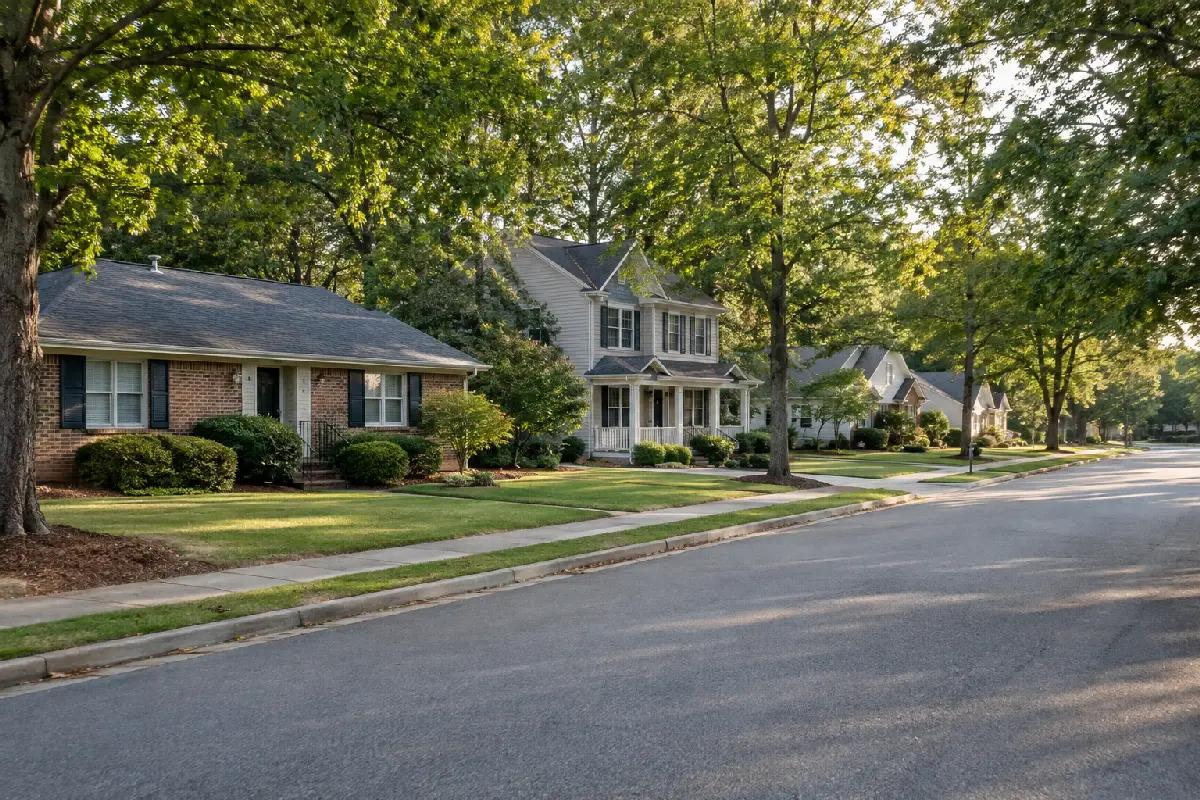
The comparison that holds up in Cumming and Forsyth County is not new versus old. It is which property combines workmanship, condition and records, lot utility, neighborhood maturity, ownership costs, timing, and a credible resale position. Use the checklist to keep attention on the factors that outlast finishes.
If you are weighing builder communities against established neighborhoods, the useful work is in the lot, the contract, and the documents. Local context is at Cumming and Forsyth County. If new construction is under consideration, see how options, inspections, and contracts are handled at New Construction. For representation from lot evaluation through contract terms, see Buyer Representation. If you are relocating and balancing a move date against due diligence, start at Relocation.