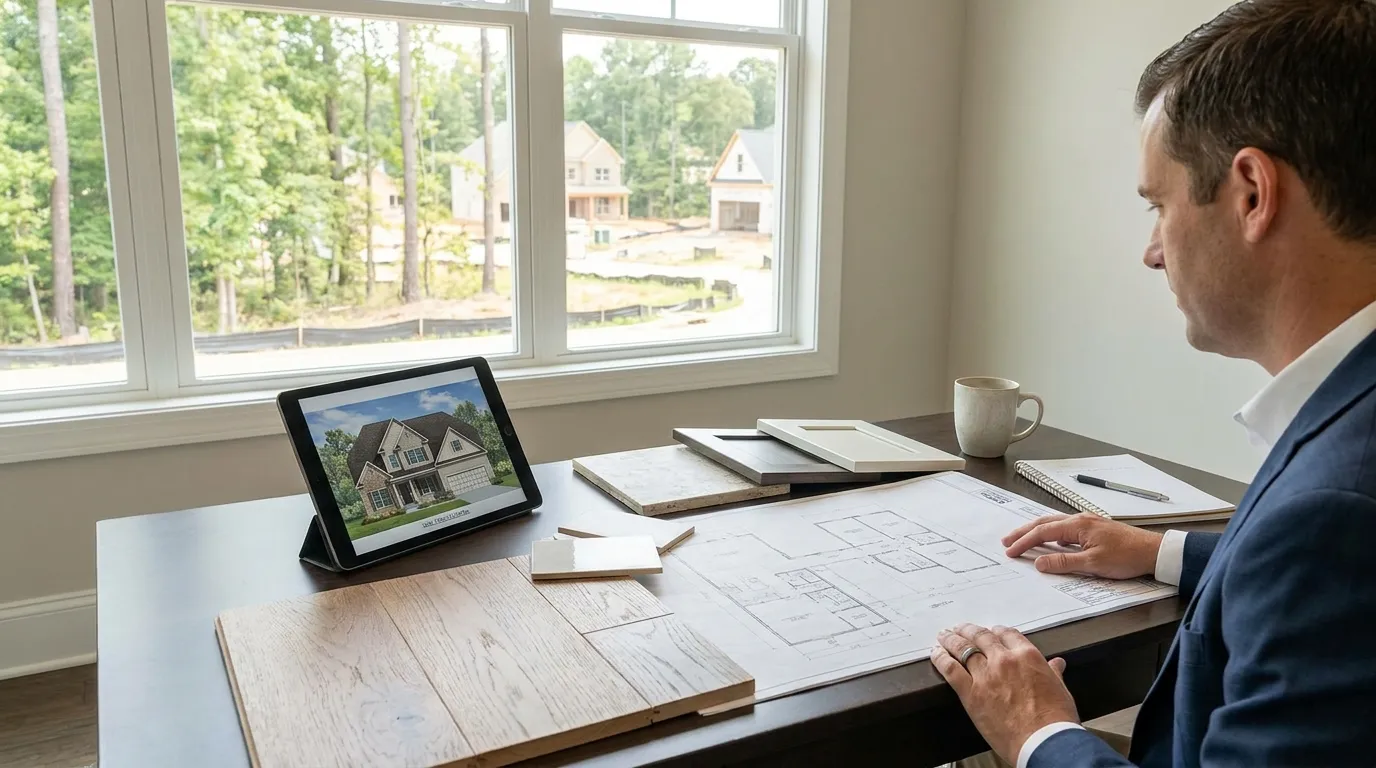
If you're considering a newly built home in Alpharetta, Milton, or Johns Creek, the decisions often come earlier than they would on a resale, and several are harder to reverse. A new house can take aging systems off the list. It replaces them with questions about the contract, selections, the schedule, inspections, and the warranty.
The sections below cover how a builder purchase differs from a resale, who the onsite sales representative works for, and how to weigh representation, contract terms, total cost, construction quality, timing, the lot, and later resale before you commit.
New Construction Isn't Just a "Newer Resale": How the Purchase Differs
On a resale, you walk a finished house, judge what is there, and negotiate from observable condition. You are committing to something you can see.
On many new-construction purchases, you are committing to plans and specifications. Elevation choices, structural options, and finishes are often selected before the house is complete. A model and a rendering are useful. They are not the house.
The contract is typically the builder's, not a standard residential form. Builders set the documents, the process, and the cutoff for changes. If marketing or a conversation conflicts with the contract, the written agreement usually controls, but only to the extent the language says so.
Selection deadlines are part of that process. Flooring, cabinets, countertops, lighting, and tile often have cutoff dates. Miss one, and you may receive the builder's standard. Ask for a change after the cutoff, and you may be told the order is closed.
Completion dates are estimates, not promises. Weather, labor, materials, permits, and utility connections all move closings. A lease end, a moving date, or a school start tied to an informal timeline is a real exposure.
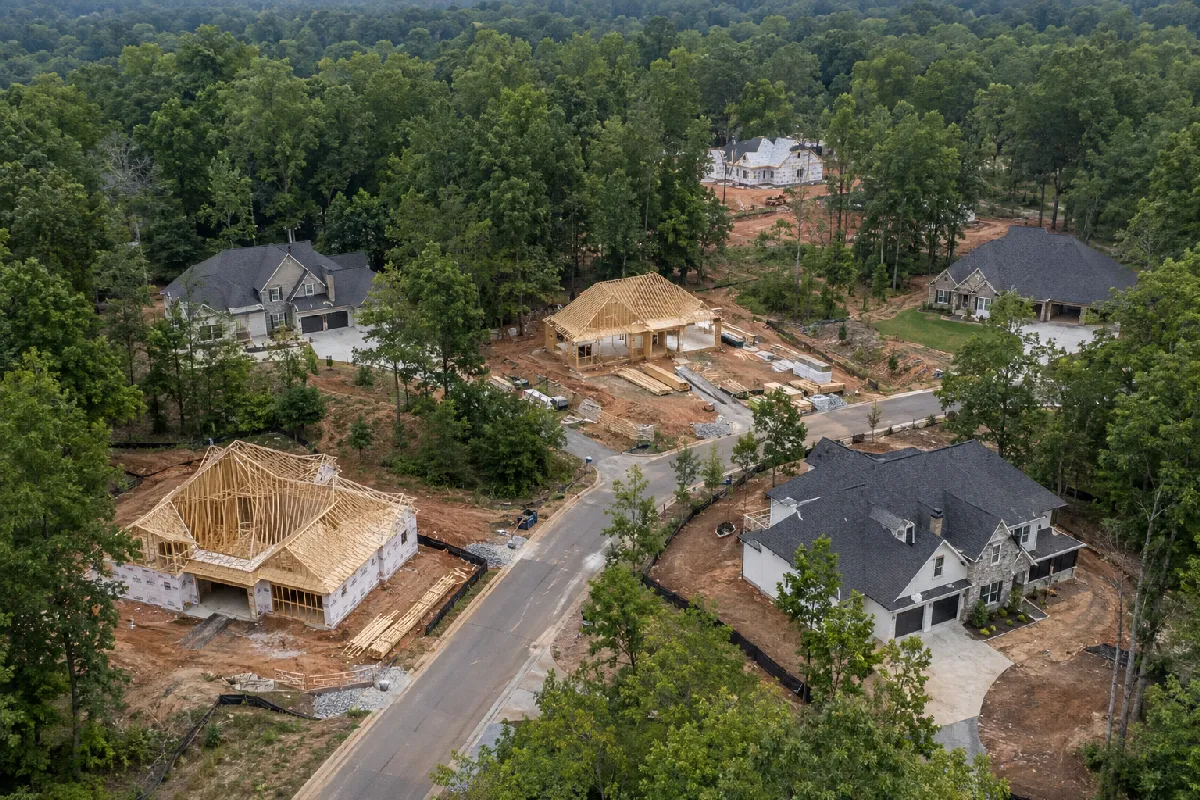
The neighborhood may still be under construction. Amenities shown in marketing may not exist yet. Roads, landscaping, and neighboring lots can remain in flux. A condition described as future may take months or years to appear.
Warranties are builder-specific. Coverage periods, exclusions, maintenance obligations, notice requirements, and claim procedures vary. This is not necessarily the home-warranty product sometimes purchased with a resale. Coverage may sit in a builder warranty, a third-party program, or both.
The Onsite Sales Representative Represents the Builder—Decide on Your Own Representation Early
The person in the sales office generally represents the builder, as an employee or through the builder's sales operation. They can explain floor plans, lot availability, pricing, and selections, and they can walk you through the paperwork.
Don't treat them as your advisor on contract terms or as someone negotiating for you. Their role is to sell the builder's homes.
Builders often require any outside agent to be named before the first visit, an online registration, or a guest card. Policies vary, and some are enforced strictly. If independent representation is even a possibility, confirm the rule before you tour or inquire on your own.
If you use an agent, put services and compensation in a buyer representation agreement. Whether a builder cooperates with buyer agents, whether the price is the same with or without an agent, and how any commission is handled all vary by builder and by agreement.
How buyer representation works on new construction is covered at resideumre.com/services/buyer-representation.
Before You Sign a Builder Contract in North Fulton: A Buyer's Evaluation Framework
These are the decision points that usually matter. Not every item will carry the same weight. Each is easier to examine before you commit than after.
1) Representation and Registration
Confirm registration rules before the visit. Some builders want an outside agent named at first contact. Others allow a window. Later involvement should not be assumed.
Decide who represents you before a guest card, an unaccompanied tour, or an online inquiry. Once you are registered as unrepresented, that status may be fixed.
2) Contract Structure and Legal Review
Builder contracts are not standardized, and familiar resale terms may not apply. Read the agreement and every exhibit, addendum, and disclosure.
Identify which document controls if marketing or a verbal statement conflicts with the contract. Separate base-price items from options and exclusions. Confirm whether substitutions and change orders are permitted, and on what terms.
Read deposit timing and refundability, the appraisal and financing language, your right to inspect during construction and before closing, and the provisions on estimated completion and delay.
Read the dispute-resolution and warranty provisions with the same care. Some contracts require mediation or arbitration. Some limit remedies in ways that are easy to miss.
If a point matters, it needs to be in writing. Verbal assurances are difficult to enforce. For legal interpretation, consult a Georgia real estate attorney.
3) Total Acquisition Cost (Beyond the Base Price)
The base price is a starting figure. Budget for lot premiums, structural options, elevation upgrades, design-center finishes, landscaping, HOA initiation fees and dues, closing costs, and financing.
If the schedule slips, carrying costs can follow: extended rent, temporary housing, storage, or overlapping housing payments.
Incentives and preferred-lender credits are specific to the transaction and can change. A credit tied to a particular lender is a savings only if the rate, fees, and terms still compare well with other options.
4) Lot and Homesite Selection
Lots in the same community are not interchangeable. Walk the one under consideration. Look at slope, drainage, and whether a retaining wall is likely. A flat yard, a slope, and a heavily wooded area do not support the same outdoor use.
Also weigh orientation and sun, privacy from neighbors and roads, traffic noise, utility easements, stormwater features, setbacks, and proximity to amenities, a bus stop, or the entrance. Those details shape daily living and what a later buyer will notice.
A current view or wooded buffer may not last. Review the plat, site plan, recorded easements, HOA documents, and public planning materials. Separate what is built from what is approved and from what is only proposed.
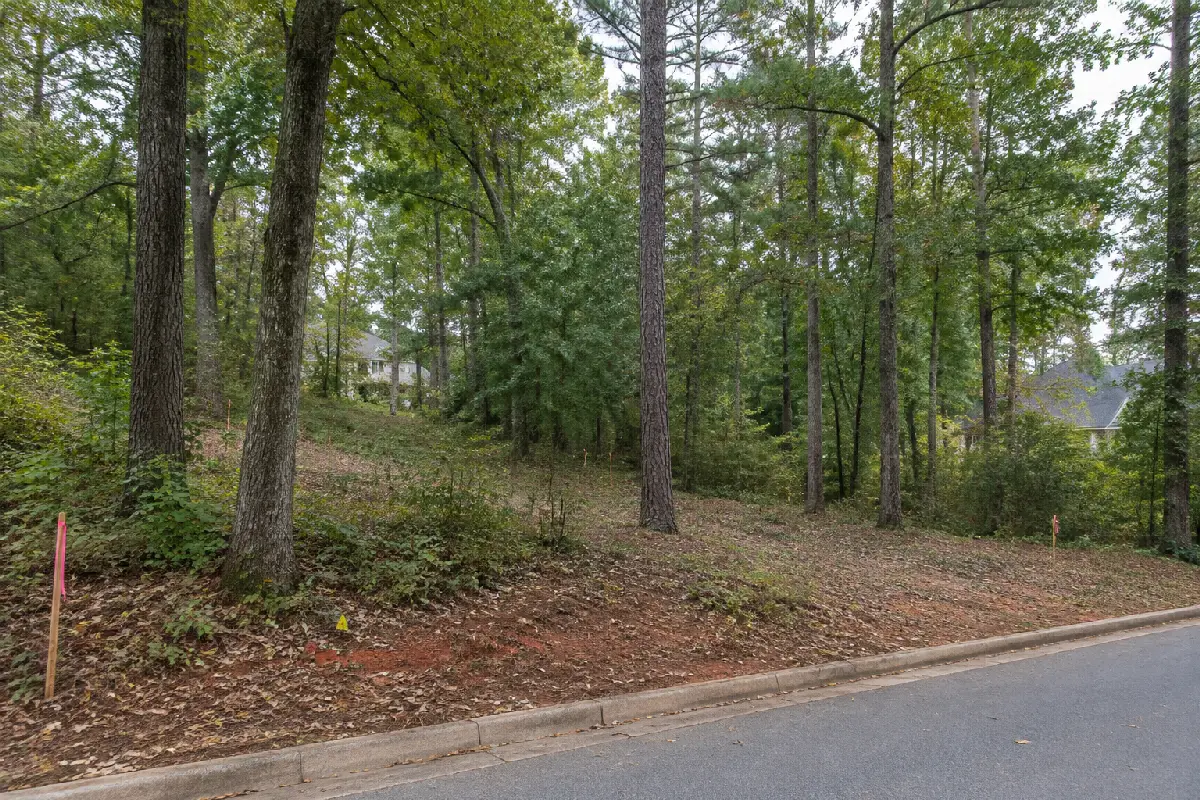
In parts of North Fulton, topography, stream buffers, tree preservation, and stormwater features materially affect usability and privacy. Open ground is not always buildable. A tree line may be the next phase.
5) Plans, Structural Options, Elevations, and Finish Upgrades
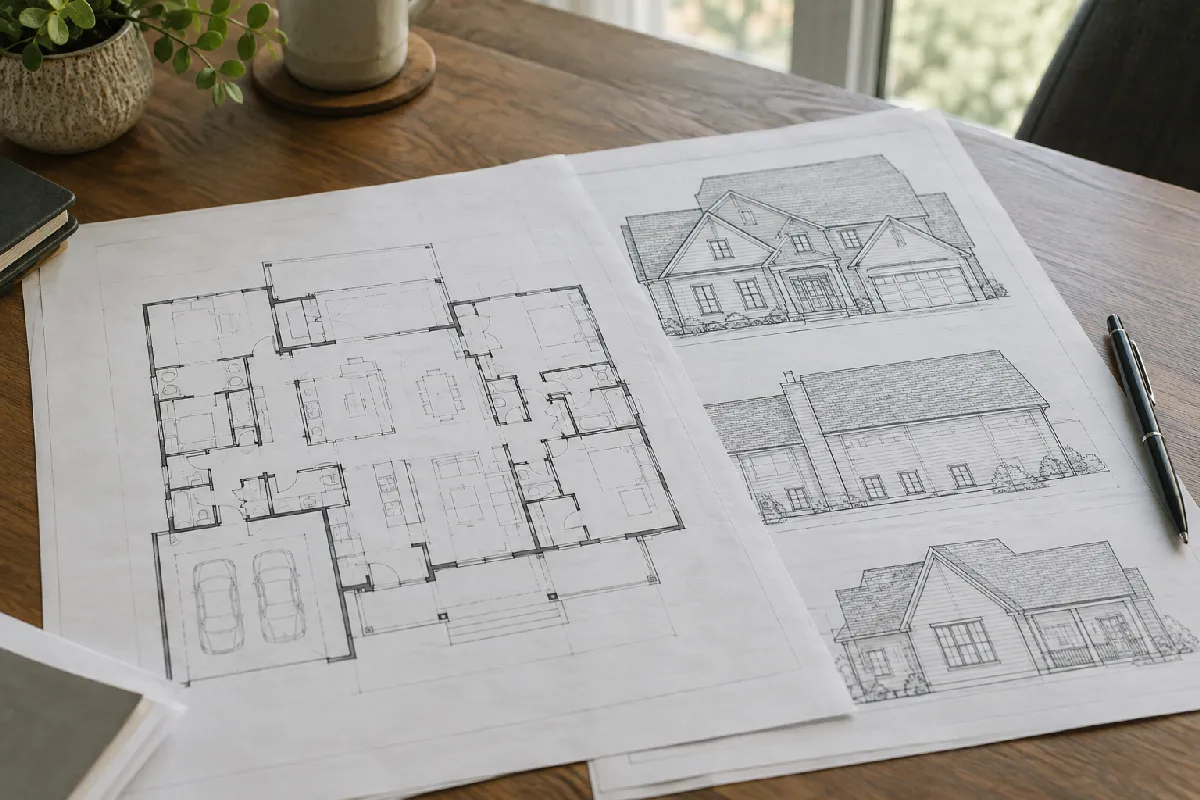
Separate structural choices from finishes. Plan modifications, room extensions, taller ceilings, and covered porches usually must be decided early. After framing begins, they often cannot be changed.
Finishes such as flooring, cabinets, countertops, appliances, lighting, and tile are typically chosen later, often at a design center. Know the standard, the upgrade cost, the deadline, and whether a late change affects the schedule.
Personal enjoyment and resale recovery are different questions. A finished basement or covered porch often appeals more broadly than a highly specific tile pattern or a narrow palette. You can still choose the personal option. Price it as preference, not as money you should expect to recover.
If the builder cites energy efficiency, smart-home features, or technology pre-wiring, confirm what is specified in writing. "Ready for" often means a rough-in, not a completed installation.
6) Construction Quality and Independent Inspections
Municipal inspections check code compliance. A builder's quality review applies the builder's standard. Neither is the same as an independent inspection done for the buyer.
Access depends on the contract and builder policy. Some allow or encourage pre-drywall and pre-closing inspections. Others restrict access or require notice. Confirm in writing what is permitted, when, and how much notice you must give.
A jobsite conversation is not a punch list. Correction requests should be written, with an agreed record of what will be fixed and by when.
Where the contract allows it, consider inspections after framing and mechanical rough-in but before drywall, again near substantial completion, and once more after closing during the warranty period.
7) Timeline, Delays, and Move Logistics
Projected completion dates are estimates. Weather, labor, materials, permits, utilities, and your own selections can all move them.
Don't anchor a lease end, a mover, a school enrollment, or a rate lock to an informal date without a real contingency. Leave buffer you can actually use.
Relocating buyers should plan temporary housing, travel for walkthroughs, and the possibility that a final inspection has to be handled remotely. Those points are covered at resideumre.com/relocation.
8) Appraisal, Financing, and Deposits
Appraisals on new construction can be difficult when options and finishes push the contract price above recent comparable sales. Clarify how a shortfall is handled. Some builders adjust. Others expect the buyer to cover the gap or to exit, on the contract's terms.
Understand the deposit schedule and when earnest money becomes nonrefundable. Some deposits stay refundable until stated milestones. In other contracts, funds are at risk from the beginning.
Compare a preferred-lender incentive on total cost. A lower price or a closing credit can be offset by rate or fees.

9) Builder Warranties and Post-Closing Procedures
Builder warranties are not a standard product. Coverage is often tiered by component, and the periods are not uniform. Read the actual document for coverage, exclusions, required maintenance, claim procedure, and notice deadlines. Missing a deadline can end coverage.
Keep the contract, specifications, selection sheets, construction photos, inspection reports, and written repair requests. Document issues in writing and follow the claims process as written.
Warranty and construction-defect claims can depend on technical notice requirements in the contract and under applicable law. Direct those questions to a Georgia real estate attorney.
10) Neighborhood Build-Out, Future Development, and Resale
Ask when unfinished amenities are actually scheduled, and what happens if slower sales delay or cancel a later phase. A rendering is not a delivery date.
Check nearby parcels the same way. Approved commercial development, additional residential phases, and road work are facts you can look up in plats, zoning maps, and planning records. Distinguish what is built, what is approved, and what is only proposed.
Read the covenants, architectural guidelines, and maintenance obligations so you know what is controlled and what you must maintain.
Then ask how this lot, plan, and finish package is likely to be received by later buyers in this price range and area. A stronger lot, a broadly appealing plan, and restrained finishes are often easier to resell than a heavily customized home on a difficult site. That is a tendency, not a promise.
New vs. Existing in Alpharetta, Milton, and Johns Creek: When Each Path Can Make Sense
New construction can offer more control over selections, construction to more recent standards, and a defined warranty process. You are less likely to inherit deferred maintenance or someone else's design choices. Construction quality still has to be checked.
The tradeoffs are earlier decisions, a variable schedule, a neighborhood that may still be changing, and a contract drafted by the builder.
An existing home can offer an established street, mature landscaping, more predictable timing, and the chance to see the house, the neighbors, the traffic, and the bus route before you commit.
In return, you may accept older components, less room to customize, and nearer-term maintenance if systems are aging.
Neither path is better in general. The better fit depends on your timing, your tolerance for uncertainty, how much you want to specify, and which tradeoffs you would rather carry.
Local Context for North Fulton Buyers
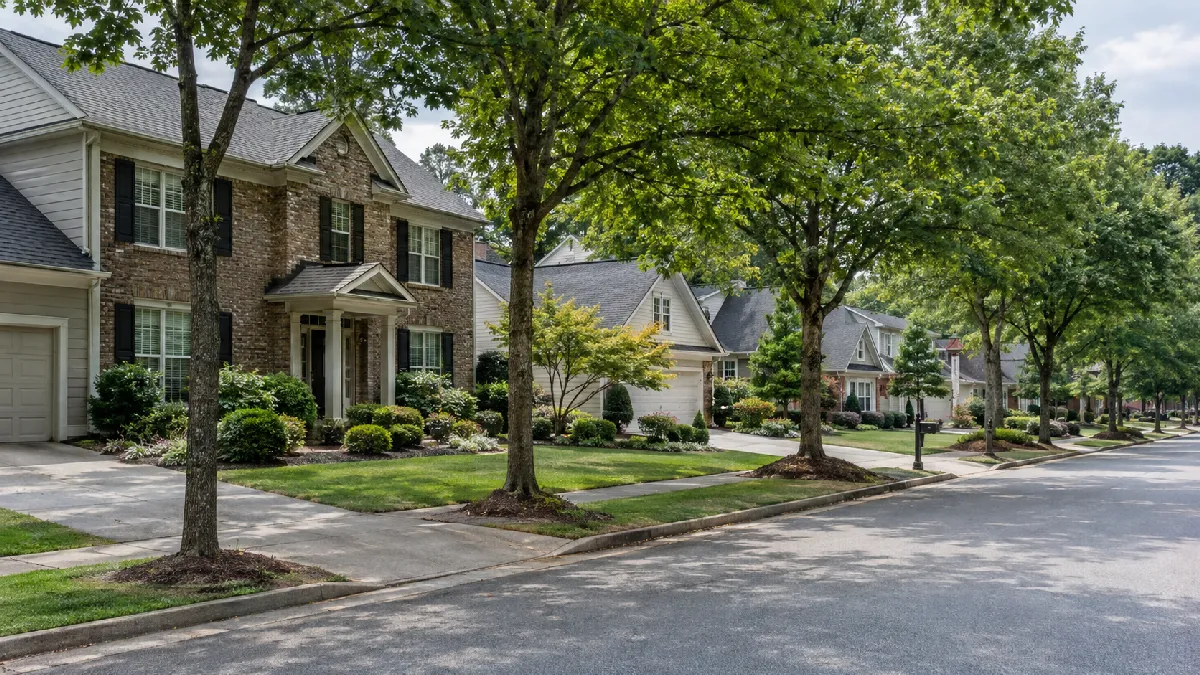
Topography, stream buffers, tree preservation, and stormwater management often affect North Fulton homesites, including privacy and what can be built next door. Marketing materials and verbal assurances are a weak substitute for the plat and the planning record.
You can explore area context at resideumre.com/north-fulton, with additional orientation for Alpharetta, Milton, and Johns Creek.
Conclusion
A new house can reduce concern about aging systems. It does not remove the need to read the contract, price the full cost, walk the lot, confirm inspection access, treat the schedule as an estimate, and understand the warranty you'll actually have.
Independent advice is most useful before you register, select a lot, commit to upgrades, or sign, while a change is still practical.
If you're considering a builder purchase in North Fulton, use this framework to decide what you need to verify, and who should represent you, before the first visit to a sales office.
Learn more about our approach to new construction and buyer representation:
- New Construction
- Buyer Representation