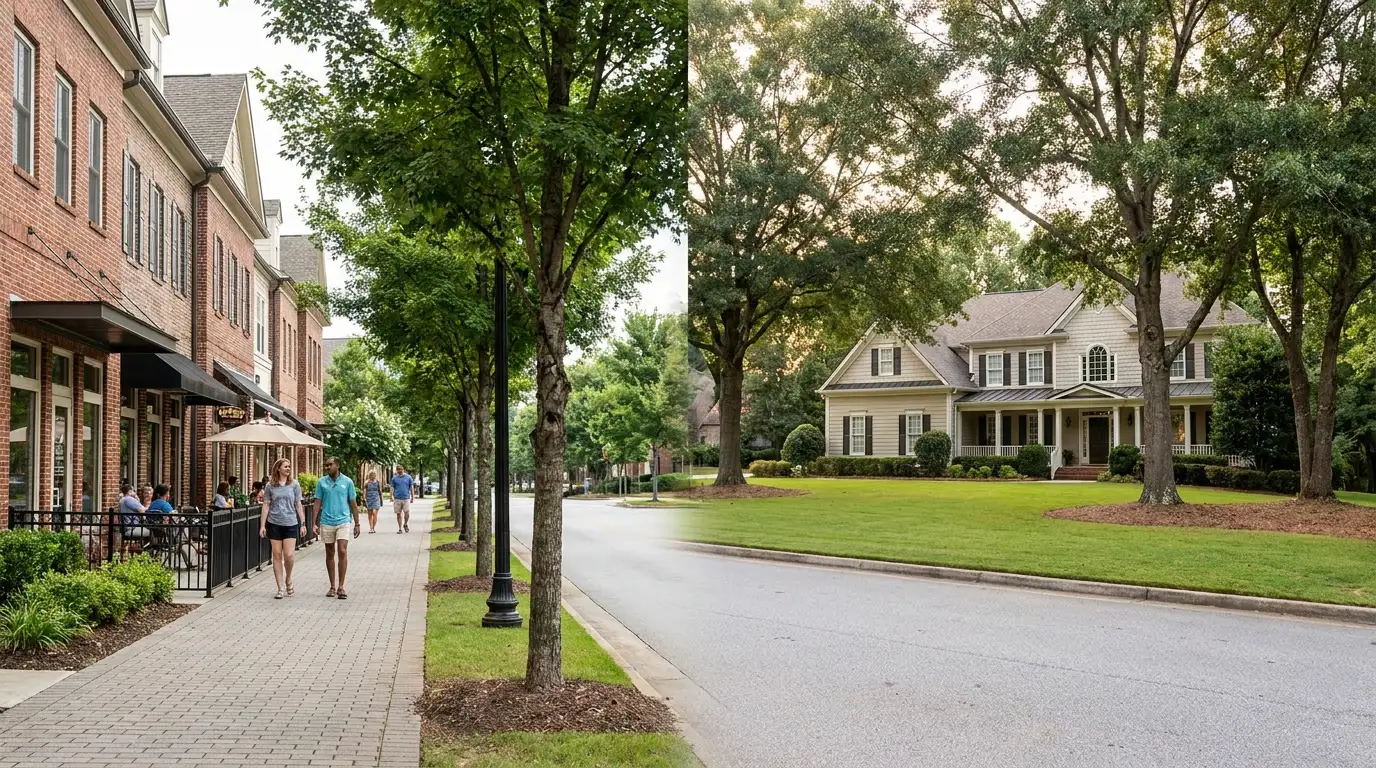
Deciding between Alpharetta and Milton is not a search for the better city. It is a choice of ownership pattern. Alpharetta generally concentrates housing near activity and mixed-use areas. Milton generally emphasizes lower-density, land-oriented residential settings. Both have exceptions. Compare the house, the lot, the neighborhood pattern, and the daily routine, and keep the addresses that match your priorities—not the city name, and not the price per square foot.
The real split: connected convenience vs. lower-density living (with exceptions)
Alpharetta's planning and redevelopment are generally oriented toward a connected mix of residential, civic, office, and retail, with walkable nodes such as Downtown Alpharetta/City Center and Avalon. Milton's planning is generally oriented toward preserving rural character and natural resources, and toward guiding growth into character areas. Activity there is more concentrated in places such as Crabapple and along Highway 9.
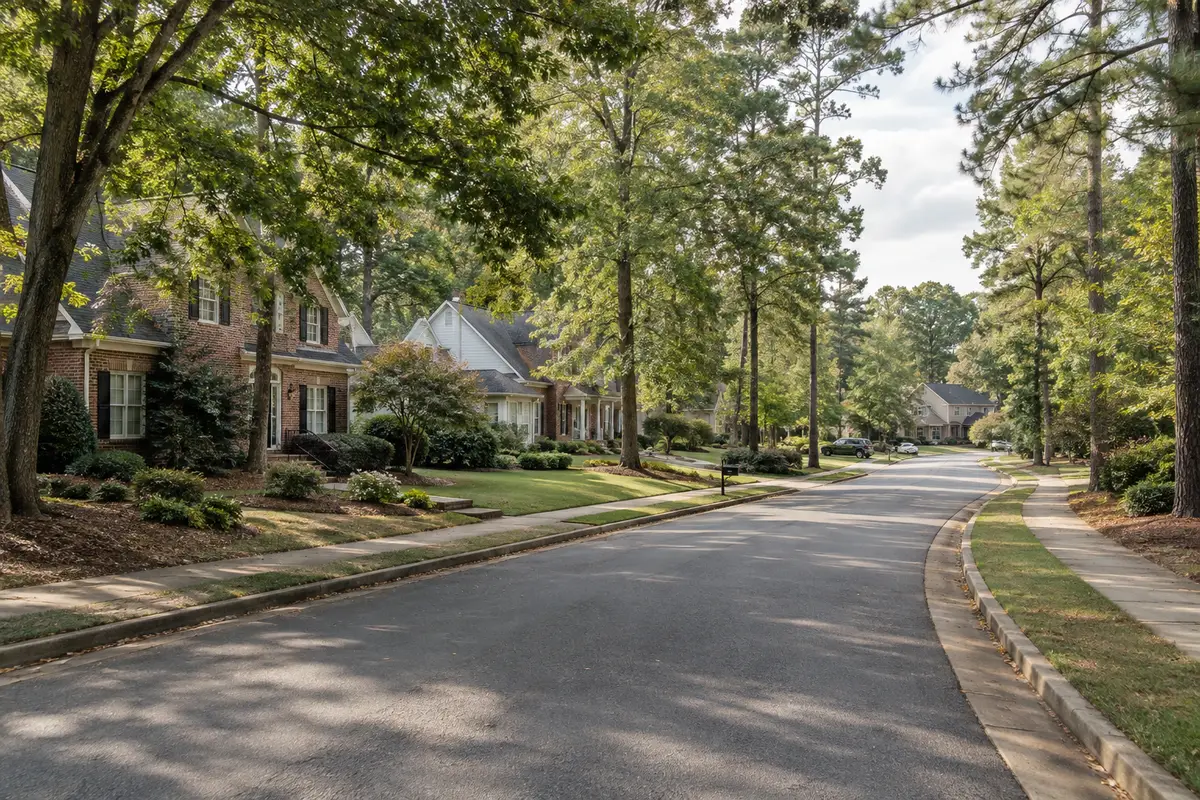
Quiet subdivisions and newer construction exist in both cities. A conventional subdivision street in Milton can feel very similar to one in Alpharetta, and a newer townhome in either city will share more with comparable attached housing than with the community around it. Judge the address. The municipal label will not tell you how the street works.
Start with the property, not the map: house, lot, and neighborhood checks
The city boundary matters far less than what you are actually buying. Start with the parcel.
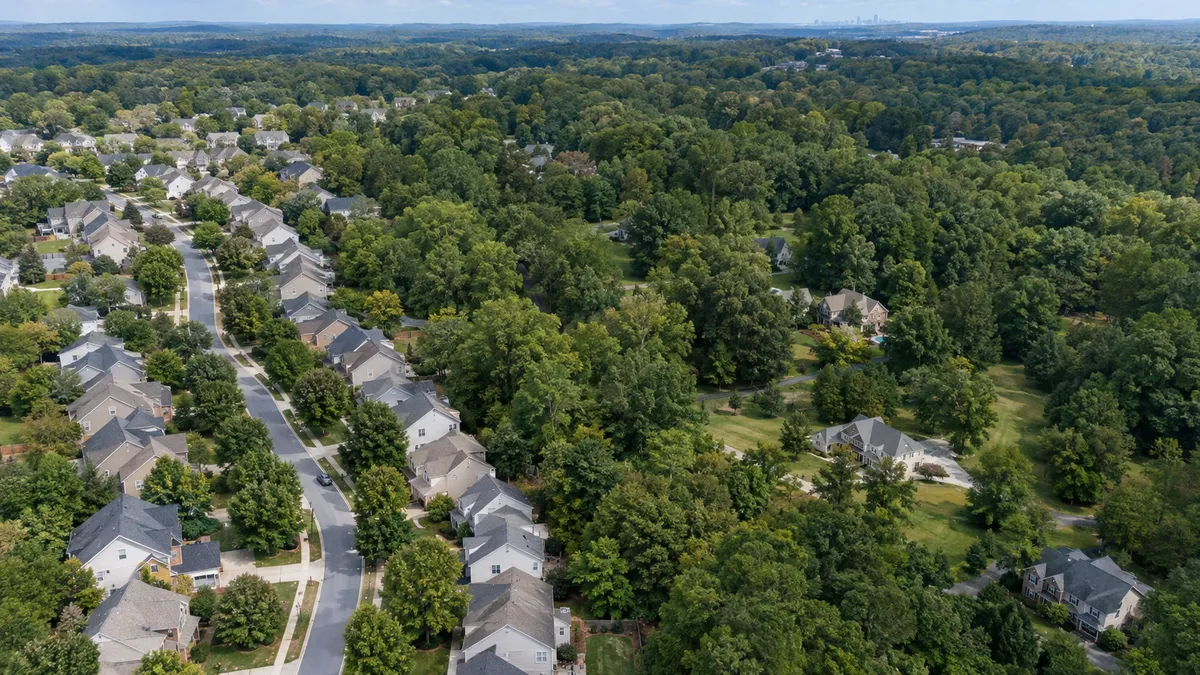
Lot reality check: Acreage is not the same as usable land. Slope, drainage, tree canopy, buffers, and where a yard is truly functional all change the outdoor space you will use. A larger parcel with steep terrain, a protected stream buffer, and dense hardwoods can offer less functional yard than a smaller lot that was graded and cleared with a plan.
Privacy is seasonal: Walk the sightlines with leaves on and with leaves off. Note neighboring decks, second-story windows, and exposure to the road. A lot that feels private in July can open clear views into adjacent homes by December.
Driveway and access: Length, grade, and any shared segment affect deliveries, the approach in wet weather, and emergency access. A long private drive can add separation. It can also add maintenance, clearing after an ice event, and a question of where guests park when you have people over.
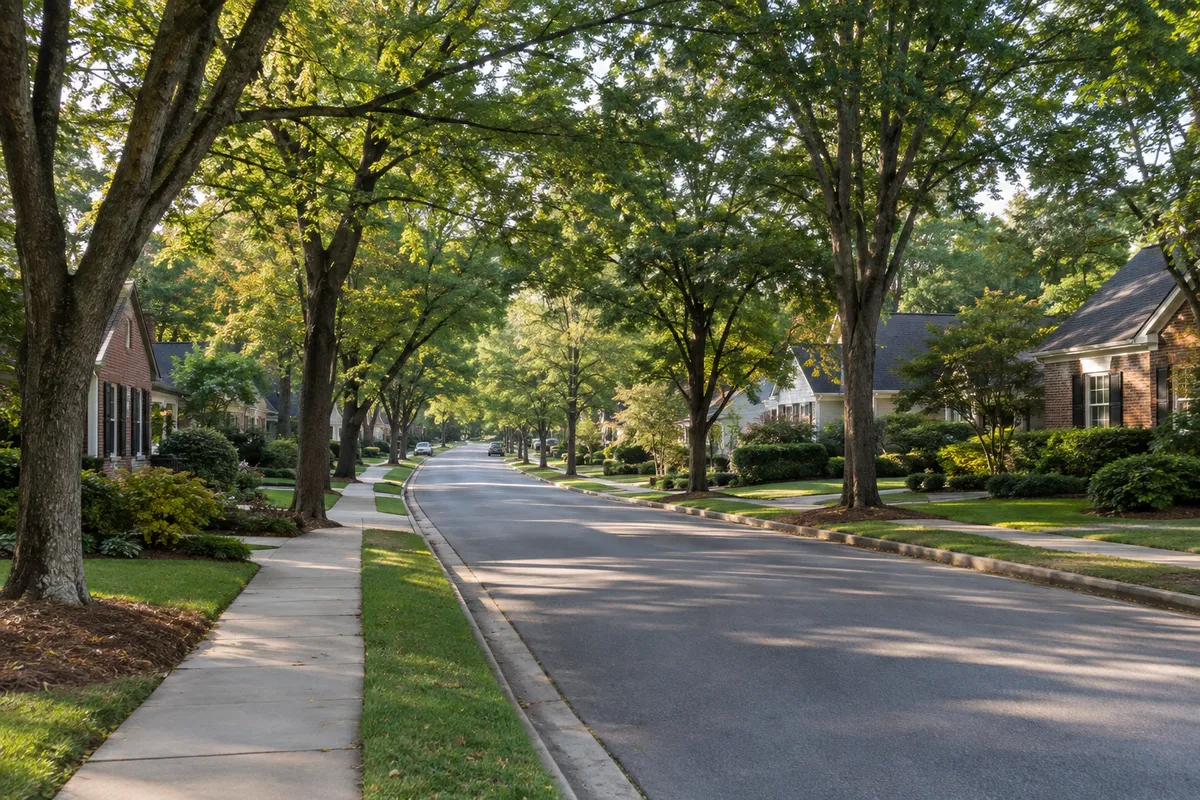
Neighborhood pattern: Street width, traffic speed, on-street parking norms, HOA rules, and how close the houses sit to one another shape daily life more than a zoning description. Walk the street at different times of day. School-morning traffic and a quiet afternoon are not the same condition.
Utilities and infrastructure: On some Milton parcels—and occasionally in Alpharetta—diligence may include a septic system, a well, outbuildings, fencing, and long-driveway maintenance. These are parcel-specific facts, not citywide assumptions. A septic system in good condition is a manageable part of ownership. One nearing capacity, or poorly maintained, can become a capital expense while you own the house, or a negotiation point when you sell.
Convenience and walkability are address-level decisions
An Alpharetta address near Downtown Alpharetta/City Center or Avalon can put dining, retail, offices, and public space into a weekly routine. That same proximity can bring event traffic, visitors, and noise from the corridor. If walkability is why the address appeals, test the walk. Proximity on a listing is not a route you will actually use.
Milton is more dispersed, with activity in pockets such as Crabapple and along Highway 9. A short distance on a map is not always a walkable distance. Check sidewalks, crossings, and terrain. What looks close may mean walking a road shoulder with no pedestrian path.
From the driveway in question, drive your weekday routes at the times you would actually leave, and walk the path you think you will use most. If that walk crosses a busy road without a signal, or the sidewalk ends partway, revise the expectation before you revise the search.
Newer versus established: what "low maintenance" really means in both cities
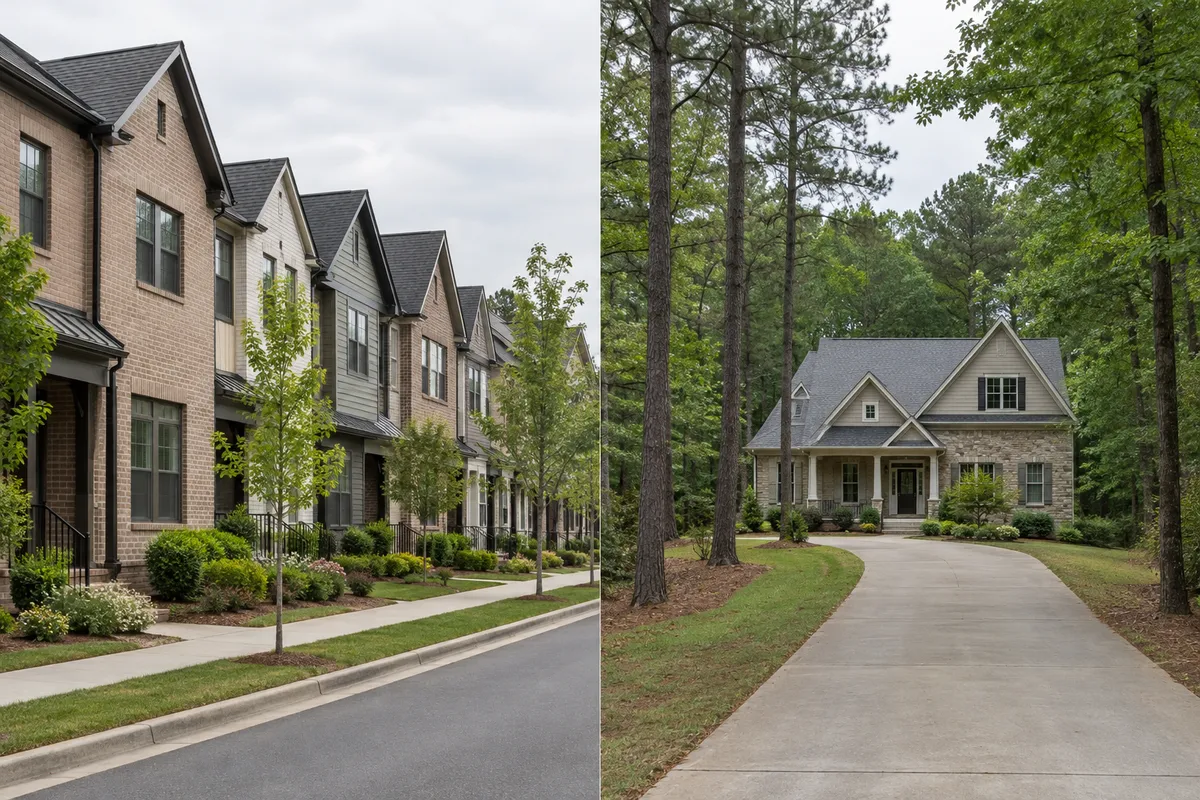
Newer homes usually offer current layouts, newer systems, and fewer immediate projects. The common tradeoffs are smaller lots, construction still active nearby, and HOA rules that leave less room to change the house. You are less likely to replace a roof in the early years. You may also have less latitude to add a fence, change the front-door color, or park a trailer in the driveway.
Established homes often offer mature landscaping, a settled location, and character that a new street has not grown into yet. The work is in the evaluation: roof, HVAC, windows, drainage, electrical and plumbing updates, the quality of prior work, and whether that work was permitted. An older home in excellent condition can be the better long-term hold than a newer one built to a minimum specification—if you can separate what has been maintained from what has been deferred.
On larger or land-oriented parcels—more often in Milton, sometimes in Alpharetta—add septic capacity and service history, well equipment if a well is present, tree work, outbuilding condition, and what the land requires year to year. A barn or detached workshop is an asset only if its condition matches how you will use it.
Two similar prices, two very different ownership experiences
Price per square foot is a weak comparison. It leaves out usable land, privacy, street context, system age, renovation quality, garage and storage, drainage, trees, HOA costs, and how often you have to drive for ordinary errands.
Compare total monthly ownership with the capital work you can reasonably expect in the first several years. A connected Alpharetta address and a more separated Milton homesite can sit in a similar price range and still cost differently to live in. One may carry association dues, little land to maintain, and newer systems. The other may have no association fee, and instead ask for periodic septic service, tree work, and driveway upkeep, with a major system closer to replacement than the listing implies. Both can be sound decisions. They are not the same ownership problem.
A spreadsheet will not show the difference in daily feel. Decide which of those costs and compromises you will carry before the city name becomes the filter.
What can change near your home—and how to check it
Alpharetta's redevelopment and connection goals can add services. They can also add construction, traffic, and activity. A quiet street beside a commercial corridor today may sit next to a mixed-use project later.
Milton's emphasis on rural character can support lower-density patterns. It does not freeze the edges. A wooded tract, a farm, or a vacant parcel may remain as it is for years, or it may be approved for a conventional subdivision.
For a specific address, review future land use, current zoning, active applications nearby, planned road projects, floodplain and stream buffers, HOA restrictions, and recorded easements. Plans and timelines change. Treat them as guidance, not guarantees. A future land use designation is a community planning goal, not by itself a binding commitment. Confirm how it applies in the zoning ordinance, and with city planning staff.
When each city may fit (priority-driven, not a verdict)
Alpharetta may fit if you want:
- A wider mix of housing types, including detached homes, townhomes, and some condominiums
- Proximity to mixed-use districts where dining, retail, offices, and civic space cluster
- Shorter drives for errands from certain addresses, with the tradeoff of tighter lots and more nearby activity
- A renovation or newer-construction comparison inside a relatively compact search area
Learn more: homes and neighborhoods in Alpharetta
Milton may fit if you want:
- More separation between homes, a treed setting, or a land-oriented feel
- The possibility of larger or more private lots, including select parcels that can support outbuildings or equestrian-style use—always parcel-specific
- A quieter, lower-density pattern as the usual backdrop, accepting more driving and more land upkeep
Conventional subdivisions exist in Milton, and some attached housing is available. Do not assume every Milton address sits on acreage.
Learn more: Milton's lower-density, land-oriented settings
A simple decision framework and checklist
Rank the routine before you rank the cities:
- How often will you realistically walk or bike to services?
- Which weekly drives—work, school, activities—matter most, and at what times?
- How much land are you willing to maintain, and pay to maintain?
- How tolerant are you of renovation work in the first several years?
- Do you prefer an HOA, or do you want to avoid one?
- Are there non-negotiables, such as a first-floor bedroom, single-level living, or extra garage and storage?
- School assignment: verify by address through official Fulton County Schools resources; boundaries can change
Then put each finalist property side by side:
- House: layout, condition, and near-term capital work
- Lot: usability, privacy, slope, drainage, and trees
- Neighborhood: density, street context, and HOA rules
- Routine: walking options, and peak-hour routes from the actual driveway
- Costs: HOA dues, utilities, tree and land care, the total monthly payment, and projects likely in the first several years
A North Fulton-wide search is often the cleaner start. Narrow from the properties themselves, not from the city line: North Fulton properties beyond the city line
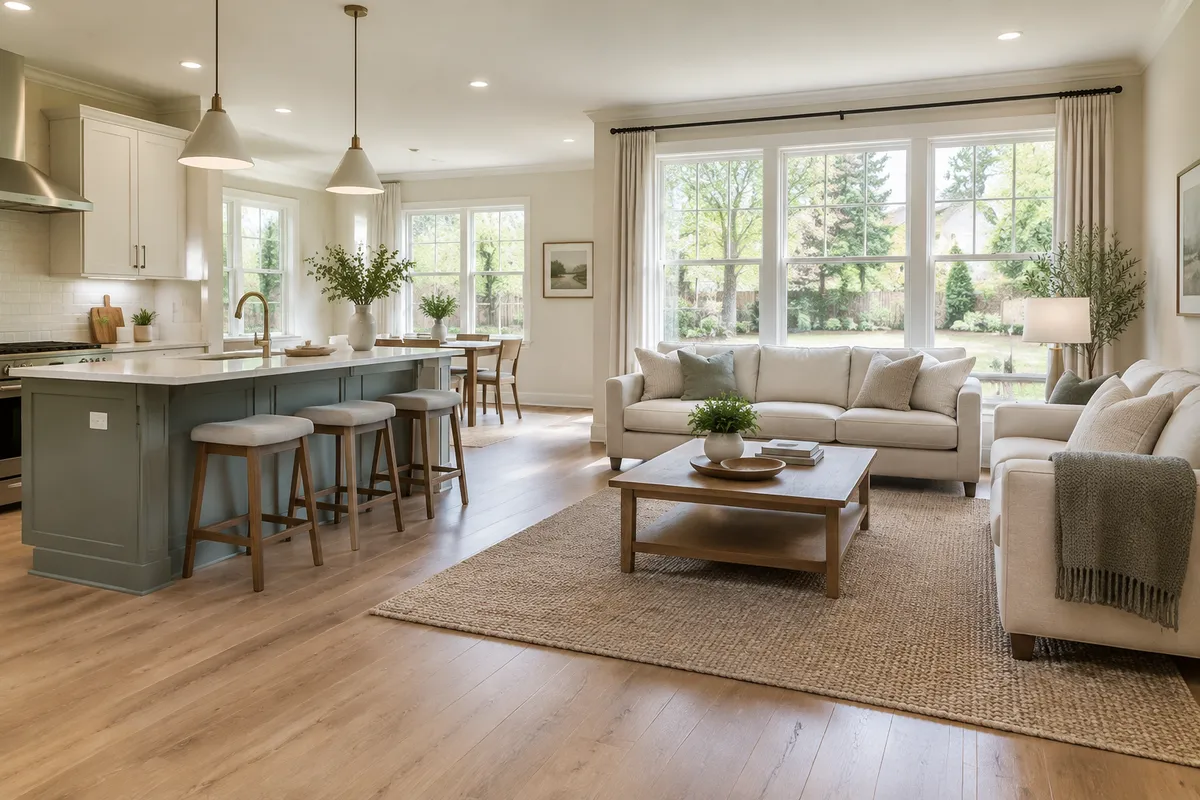
The choice is the weekly tradeoff you will accept: connected convenience, or lower-density living, with real exceptions on both maps. Compare the house, the lot, the street, and the routine, then the full cost of owning each.
If you are narrowing a search between Alpharetta and Milton, we can compare actual homes in context—side by side—before you settle on one area. Start a focused plan at our relocation page, or read how we approach buyer representation at our buyer representation service.